
Understanding Small White Spots on Arms and Legs: Causes, Care, and Prevention
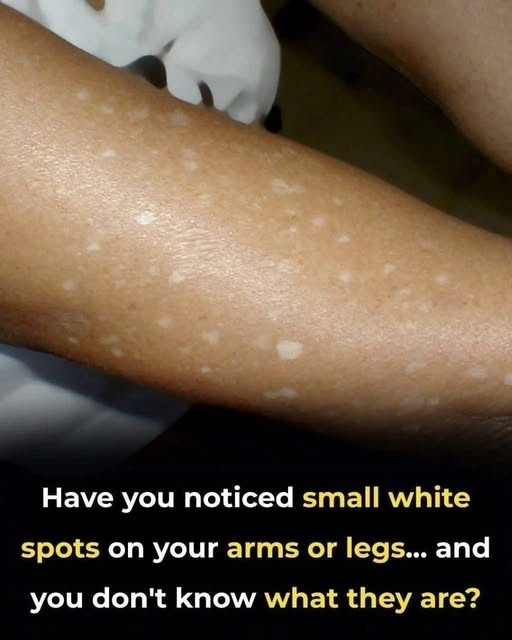
1. What are the small white spots commonly found on older legs?
They are often diagnosed as idiopathic guttate hypomelanosis (IGH), which are benign, flat white spots caused by cumulative sun exposure.
2. Can sun exposure cause white spots on the skin?
Yes, long-term UV exposure can damage melanocytes in localized areas, leading to a permanent loss of pigment in those tiny spots.
3. Are idiopathic guttate hypomelanosis spots dangerous?
No, IGH spots are completely harmless, non-cancerous, and purely cosmetic.
4. Can I get rid of white spots with home remedies?
Because IGH involves a localized loss of melanin-producing cells, topical home remedies rarely restore original pigmentation.
5. When should I see a doctor about skin spots?
Consult a dermatologist if spots change rapidly, bleed, itch intensely, or develop irregular, concerning borders.
6. Do moisturizing lotions help clear up white spots?
Moisturizers improve overall skin texture and reduce dryness, but they do not reverse pigment loss caused by sun damage.
7. How can I prevent new white spots from forming?
Consistently applying broad-spectrum sunscreen and wearing protective clothing outdoors helps prevent further UV-induced skin changes.
8. Are white spots contagious?
Benign sun spots like IGH are entirely non-contagious, unlike certain fungal skin infections that can also cause light patches.
9. What is the difference between IGH and vitiligo?
IGH consists of small, stable spots caused by sun exposure, whereas vitiligo is an autoimmune condition causing larger, progressive patches of pigment loss.
10. How do dermatologists diagnose skin spot conditions?
Dermatologists use specialized tools like a Wood’s lamp or dermatoscope to examine skin pigmentation and rule out other conditions.