
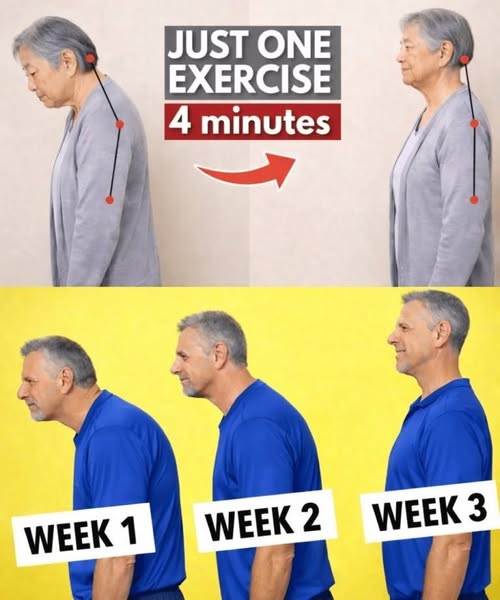
How Four Minutes of Daily Stretching Can Transform Your Posture and Relieve Neck Strain
In our modern digital world, posture-related discomfort has become an increasingly common challenge for adults of all ages. Long hours spent hunching over desks, peering down at smartphones, or driving in traffic take a cumulative toll on our spinal alignment. Over time, these daily habits frequently lead to rounded shoulders, upper back stiffness, and forward head posture—often colloquially referred to as “tech neck”.
The good news is that targeted physical movement can make a dramatic difference. Committing just four minutes a day to a simple, intentional stretching routine can help rebalance tight muscle groups, open the chest, realign the spine, and relieve persistent neck and upper shoulder tension. Understanding the mechanics of alignment reveals how consistent daily effort transforms posture and boosts overall vitality.
Understanding Forward Head Posture and Rounded Shoulders
Forward head posture occurs when the head shifts forward relative to the cervical spine. For every inch the head moves forward beyond its neutral position, the effective weight supported by the neck and upper back muscles doubles. This dramatic increase in leverage forces the muscles surrounding the neck, shoulders, and upper back to work continuously just to hold the head upright.
                 ┌────────────────────────────────────────┐
                 │     ANATOMICAL POSTURAL DYNAMICS       │
                 └───────────────────┬────────────────────┘
                                     │
         ┌───────────────────────────┼───────────────────────────┐
         ▼                           ▼                           ▼
┌─────────────────┐         ┌─────────────────┐         ┌─────────────────┐
│ Tight Chest     │         │ Overstretched   │         │ Compressed      │
│ Muscles         │         │ Upper Back      │         │ Cervical Spine  │
│ • Pectoralis    │         │ • Rhomboids     │         │ • Suboccipitals │
│   constriction  │         │   weakness      │         │   tension       │
└─────────────────┘         └─────────────────┘         └─────────────────┘
When forward head posture combines with rounded shoulders, a predictable muscle imbalance develops:
- Tight Front Musculature: The chest muscles (pectoralis major and minor) and anterior neck flexors become shortened and tight, pulling the shoulders inward.
- Weak Back Musculature: The middle trapezius, rhomboids, and deep cervical flexors become overstretched, lengthened, and structurally weakened.
- Compressed Cervical Spine: The suboccipital muscles at the base of the skull compress, frequently triggering tension headaches, stiffness, and reduced neck mobility.
The Four-Minute Daily Stretch Protocol
Restoring neutral spinal alignment does not require hours in the gym or complex equipment. A highly effective routine focuses on lengthening the tight structures in the front of the body while activating the stabilization muscles in the back.
The Wall Angels Stretch (Targeted Chest and Shoulder Opener)
One of the most effective exercises for reversing rounded shoulders and forward head posture is the Wall Angel. Performing this exercise for four focused minutes daily builds postural awareness, mobilizes the thoracic spine, and strengthens scapular stabilizers.
How to Perform the Stretch Correctly:
- Initial Setup: Stand with your back flat against an empty wall. Place your feet roughly six inches away from the baseboard, keeping your head, upper back, and hips lightly touching the wall surface.
- Arm Positioning: Bring your arms up against the wall in a “goalpost” or “W” shape, bending your elbows at 90-degree angles. Aim to keep the backs of your hands, wrists, and elbows touching the wall if comfortable.
- Chin Tuck: Gently tuck your chin slightly backward toward your neck (creating a subtle double chin) to lengthen the back of your cervical spine and align your head directly over your shoulders.
- Controlled Movement: Slowly slide your arms upward along the wall into a “Y” position, maintaining contact with the wall as much as possible. Hold the top position for two seconds, then slowly lower back down to the starting position.
- Cadence: Perform smooth, controlled repetitions for four minutes, focusing on deep diaphragmatic breathing and squeezing your shoulder blades together on the downward motion.
Key Insight: Consistency is far more powerful than intensity. Performing a four-minute postural realignment daily creates lasting neuromuscular memory, teaching your nervous system to adopt optimal alignment naturally throughout the day.
Additional Daily Habits for Long-Term Postural Health
While a dedicated four-minute stretch provides a powerful catalyst for alignment, supporting your spine throughout the workday guarantees lasting results:
- Adjust Screen Ergonomics: Elevate computer monitors so the top third of the screen is at eye level. This prevents the head from tilting forward or down.
- Practice Micro-Breaks: Every 30 to 45 minutes, pause for 15 seconds to roll your shoulders back, pull your head into neutral alignment, and take a deep breath.
- Optimize Phone Usage: Lift mobile devices toward eye level rather than dropping your chin toward your chest when reading messages or browsing.
Readers looking to enhance their daily workstation comfort may also appreciate our practical guide on ergonomic home office setups for back health.
The Benefits of Consistent Spinal Realignment
Restoring your body’s natural alignment yields benefits that extend far beyond aesthetics. As your shoulders open and your spine realigns, you may experience:
- Significant Pain Reduction: Easing muscle strain in the neck and upper back lowers the frequency of tension headaches and localized soreness.
- Improved Breathing Capacity: Opening the chest allows the lungs to expand fully, improving oxygen intake and boosting energy levels.
- Enhanced Balance and Mobility: Proper alignment distributes body weight evenly across joints, reducing wear and tear on the spine and knees.
- Boosted Confidence and Energy: Good posture naturally communicates vitality, strength, and confidence in both personal and professional environments.
For additional insight into holistic physical wellness, explore our comprehensive overview of core stability exercises for mobility.
Key Takeaways
- Targeted Daily Movement: Spending four minutes a day on a chest-opening stretch helps counteract hours of sitting and slouching.
- Address the Root Cause: Effective posture correction opens tight chest muscles while strengthening overstretched upper back muscles.
- Simple Technique: Wall Angels and chin tucks provide safe, accessible ways to realign the spine without special equipment.
- Holistic Benefits: Improving posture reduces neck strain, eases tension headaches, enhances breathing, and boosts daily energy.
Frequently Asked Questions
How long does it take to see results from a daily posture stretch?
Most individuals notice reduced muscle tension and improved neck mobility within one to two weeks of consistent daily stretching. Noticeable structural improvements in shoulder alignment typically develop over three to six weeks.
Can rounded shoulders and forward head posture be permanently fixed?
Yes. Postural imbalances caused by lifestyle habits can generally be reversed through consistent stretching, muscle strengthening, and ergonomic adjustments.
Is it normal to feel mild muscle soreness when starting posture exercises?
Yes. Mild fatigue or light soreness in the upper back muscles (between the shoulder blades) is normal as dormant posture-stabilizing muscles adapt to regular activation.
Should you do posture stretches in the morning or at night?
Posture stretches are beneficial at any time. Doing them in the morning helps set good alignment for the day, while performing them in the evening releases accumulated tension from sitting.
What should you do if a posture stretch causes sharp pain?
Stretches should feel like a comfortable gentle pull, never sharp pain. If you experience sharp pain, numbness, or tingling, stop the stretch immediately and consult a healthcare professional or physical therapist.