How Many People Are in This Family? Decoding the Classic 9-Sons Riddle
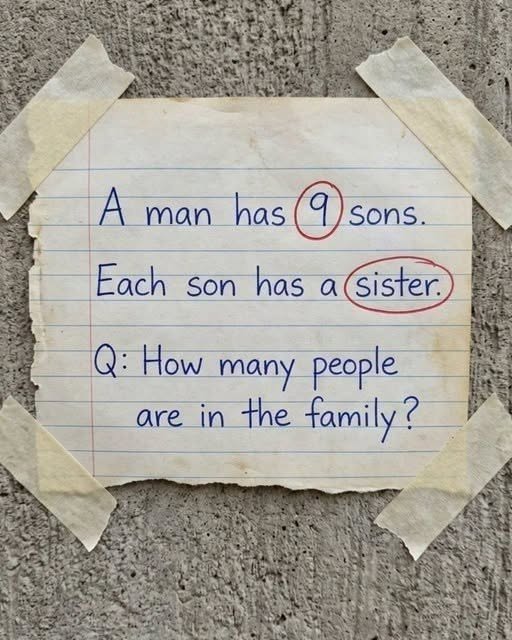
Classic word riddles have a unique way of stopping people mid-scroll on social media. A simple, handwritten note taped to a wall reads: “A man has 9 sons. Each son has a sister. Q: How many people are in the family?”
At first glance, the math feels effortless—until you check the comments and find dozens of wildly different answers. Because our brains naturally rush toward quick multiplication, riddles like this expose how easily linguistic phrasing can trick fast thinkers. Breaking down the exact wording step by step reveals why this puzzle continues to spark lively debates online and sharpens how we process everyday logic.
Why Most People Get the Answer Wrong at First Glance
When reading a math-style word problem quickly on a phone screen, the human brain relies on mental shortcuts—known in cognitive psychology as heuristics.
- The Multiplication Trap: Seeing the number “9” paired with the word “each” triggers an automatic reflex to multiply ($9 \times 2 = 18$), leading many readers to guess 18 children plus the father (19 people).
- Overlooking Shared Relationships: Fast readers treat each son as an isolated unit rather than members of the exact same household sharing the same siblings.
                 ┌────────────────────────────────────────┐
                 │      HOW THE RIDDLE TRICKS THE BRAIN   │
                 └───────────────────┬────────────────────┘
                                     │
         ┌───────────────────────────┼───────────────────────────┐
         ▼                           ▼                           ▼
┌─────────────────┐         ┌─────────────────┐         ┌─────────────────┐
│ Fast Reading    │         │ Word Trigger    │         │ Correct Logic   │
│ • Skims phrasing│         │ • "Each" sparks │         │ • All 9 boys    │
│   for numbers   │         │   multiplication│         │   share 1 sister│
└─────────────────┘         └─────────────────┘         └─────────────────┘
Step-by-Step Breakdown: Finding the Exact Answer
Pages: 1 2