
What Your Leg Alignment Shapes Say About Your Posture and Biomechanics
When we think about posture, our minds usually jump straight to the upper body—straightening rounded shoulders, sitting up tall at a desk, or holding the neck in neutral alignment. However, biomechanics experts and physical therapists know that true posture begins from the ground up. The way your feet, ankles, knees, and hips align plays a foundational role in how weight is distributed across your entire kinetic chain.
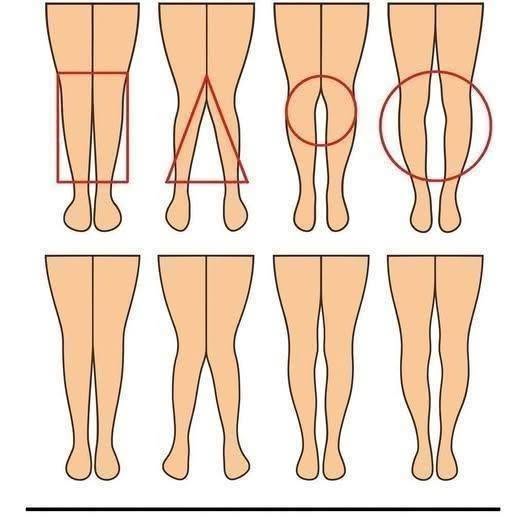
Across social media feeds, visual diagrams categorizing different leg alignment shapes—such as straight, bow-legged, knock-kneed, or false bow-legged patterns—frequently spark interest and curiosity. Examining these geometric alignment shapes provides valuable insights into lower-body mechanics, joint health, movement patterns, and corrective exercise strategies.
Understanding Lower-Body Biomechanics and Kinetic Alignment
The lower extremities operate as an interconnected structural system. The position of the femur (thigh bone) in the hip socket influences the angle of the patella (kneecap), which in turn dictates the tracking of the tibia (shin bone) down to the ankle and foot arch.
When one part of this chain deviates from neutral alignment, neighboring joints compensate. Understanding how structural variations manifest visually helps individuals identify potential biomechanical inefficiencies before they lead to joint strain or discomfort.
                 ┌────────────────────────────────────────┐
                 │     LOWER-BODY KINETIC CHAIN PHASES    │
                 └───────────────────┬────────────────────┘
                                     │
         ┌───────────────────────────┼───────────────────────────┐
         ▼                           ▼                           ▼
┌─────────────────┐         ┌─────────────────┐         ┌─────────────────┐
│ Hip Position    │         │ Knee Tracking   │         │ Foot Arch       │
│ & Rotation      │         │ & Angle         │         │ & Pronation     │
│ • Internal or   │         │ • Valgus or     │         │ • Flat feet or  │
│   external drift│         │   varus stress  │         │   high arches   │
└─────────────────┘         └─────────────────┘         └─────────────────┘
The Four Common Leg Alignment Patterns
Physical therapists and orthopedic specialists typically categorize leg alignment into four primary structural variations. Each pattern reflects distinct muscle activation tendencies and mechanical pressures.
1. Standard or Neutral Alignment (Type A)
In neutral alignment, the hips, knees, and ankles align along a relatively straight vertical axis. When standing with ankles touching, the thighs, knees, calves, and ankles make soft contact with small, natural gaps above and below the knees. This structure allows ground reaction forces to distribute evenly across the hip joints, menisci, and ankle complex.
2. Genu Valgum or “Knock-Knees” (Type B)
Genu valgum occurs when the knees angle inward toward each other while the ankles remain separated.
- Biomechanical Causes: This pattern is often associated with weak gluteal muscles (particularly the gluteus medius), internal hip rotation, tight hip adductors, or over-pronation (flat feet).
- Impact: Inward knee tracking places increased strain on the medial collateral ligament (MCL) and alters patellar tracking during squatting or running.
3. Genu Varum or “Bow-Legs” (Type C)
Genu varum is characterized by an outward curvature of the legs, where the knees remain widely separated even when the feet and ankles touch.
- Biomechanical Causes: This alignment can stem from skeletal architecture, tight hip external rotators, or bow-legged structural development.
- Impact: Outward bowing increases pressure on the inner (medial) compartment of the knee joint and can contribute to lateral ankle instability over time.
4. False Bow-Legged or Mixed Alignment (Type D)
In this variation, the knees touch or remain close together, but the lower shins and calves curve outward, creating a visual gap below the knees while the feet touch.
- Biomechanical Causes: This is typically a functional rather than structural issue, caused by a combination of internal femoral rotation at the hip paired with tight calf muscles or hypermobile knee extension.
- Impact: Uneven distribution of calf muscle development and subtle tracking issues during walking or running.
Readers interested in holistic physical movement can also explore our guide on effective core stability exercises for mobility.
How Leg Alignment Influences Whole-Body Posture
Because the body functions as an integrated unit, lower-body alignment directly influences spinal posture and pelvic tilt.
Key Insight: Knock-knee alignment (Genu Valgum) frequently pulls the pelvis into an anterior pelvic tilt, deepening the arch in the lower back and contributing to lumbar strain. Conversely, bow-legged alignment can encourage a posterior pelvic tilt, flattening the natural spinal curve.
Recognizing these connections allows individuals to adopt targeted stretching and strengthening routines that address the root cause of postural discomfort rather than just treating symptoms.
Targeted Exercises for Posture and Alignment Improvement
While bone structure is fixed in adults, functional alignment—how your muscles control joint angles during movement—can be significantly improved through targeted exercise.
                 ┌────────────────────────────────────────┐
                 │    CORRECTIVE EXERCISE CATEGORIES      │
                 └───────────────────┬────────────────────┘
                                     │
         ┌───────────────────────────┼───────────────────────────┐
         ▼                           ▼                           ▼
┌─────────────────┐         ┌─────────────────┐         ┌─────────────────┐
│ Glute Medius    │         │ Adductor        │         │ Arch & Ankle    │
│ Activation      │         │ Lengthening     │         │ Mobilization    │
│ • Clamshells &  │         │ • Inner thigh   │         │ • Foot doming   │
│   banded walks  │         │   stretches     │         │   & calf stretches
└─────────────────┘         └─────────────────┘         └─────────────────┘
- For Inward-Tracking Knees (Knock-Knees): Focus on strengthening the gluteus medius and outer hip rotators with clamshells, lateral resistance band walks, and single-leg balance drills. Stretch tight inner thighs (adductors) and support foot arches with orthotics or barefoot arch-strengthening exercises.
- For Outward-Bowing Knees (Bow-Legs): Focus on strengthening the inner thigh adductors with squeezes using a pilates ring or block. Stretch tight hip rotators and perform foam rolling along the IT band and lateral quadriceps.
- For General Postural Balance: Practice posture awareness during daily walking and standing. Keep weight evenly distributed across three points of the foot: the heel, the base of the big toe, and the base of the little toe.
For a deeper dive into workplace ergonomics and body mechanics, check out our practical guide on ergonomic desk setups for back and joint health.
Key Takeaways
- Kinetic Foundation: Lower-body alignment shapes overall posture, pelvic positioning, and joint weight distribution.
- Four Primary Shapes: Leg alignment generally falls into neutral, knock-knee (valgum), bow-leg (varum), or mixed structural patterns.
- Functional vs. Structural: Muscle imbalances often exaggerate visual alignment issues, meaning targeted exercises can yield significant improvements.
- Proactive Mobility: Strengthening hip stabilizers and improving foot arch mechanics protects long-term knee and back health.
Frequently Asked Questions
Can adults really fix or change their leg alignment?
While adult bone structure cannot be altered without surgery, muscle imbalances that pull joints out of alignment can be corrected through targeted physical therapy, hip strengthening, and gait retraining.
How do I know if my knee alignment is causing back pain?
If you notice that your back pain increases after standing or walking, or if you have flat feet and inward-tracking knees, your lower-body mechanics may be contributing to pelvic tilt and lower back stress.
Are orthotic shoe inserts helpful for leg alignment issues?
Yes. Orthotic insoles can help correct over-pronation (flat feet), providing a stable foundation that reduces inward knee collapse and promotes proper joint stacking during walking.
What is the most common exercise to fix knock-knees?
Strengthening the outer hips with side-lying leg lifts, clamshells, and banded lateral walks is highly effective for counteracting inward knee drift.
When should someone consult a specialist about leg alignment?
If leg alignment variations are accompanied by persistent joint pain, swelling, difficulty walking, or reduced mobility, it is advisable to consult an orthopedic specialist or physical therapist.