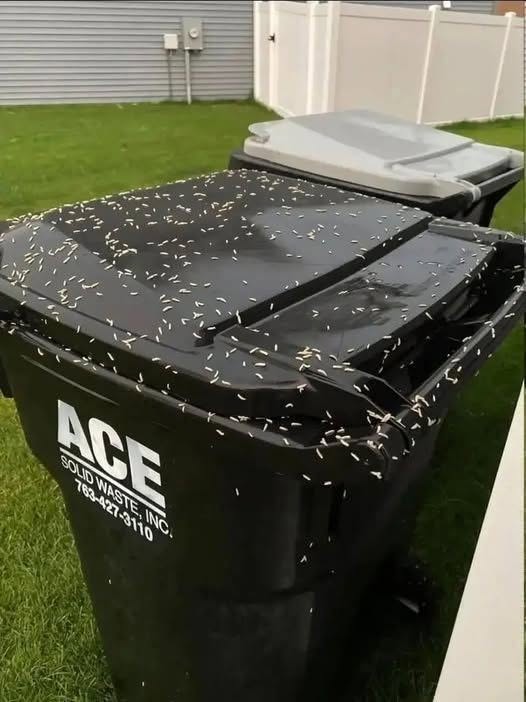
Finding “Rice” Moving on Your Garbage Can? Here Is What Those Larvae Actually Are
Finding maggots concentrated on the top and sides of a closed garbage can often causes confusion, as people wonder how they escaped the bags inside.
This migration behavior usually happens when the larvae have finished their primary feeding phase. Once maggots reach full size, an innate biological impulse drives them to crawl away from the moist, wet food source to find a dry, dark, cool place to burrow, pupate, and transform into adult flies.
They squeeze through tiny gaps in container seals, climb up the interior walls of the bin, and spill out over the lid and edges in search of soil or crevices.
Are They Dangerous to Your Health?
While maggots themselves do not bite, sting, or carry venom, they are still a sign of unsanitary conditions.
- Pathogen transmission: Because they feed on decaying waste and filth, maggots can mechanically transport bacteria such as E. coli and Salmonella on their bodies.
- Handling precautions: Avoid touching them with bare hands. Wear heavy-duty cleaning gloves if you need to scrub or handle contaminated areas.
- Secondary pests: A heavy maggot infestation will rapidly attract larger scavengers, including rodents, stray cats, raccoons, and birds.
Step-by-Step Guide to Cleaning and Eliminating the Infestation
Getting rid of a severe maggot outbreak requires more than just spraying water. Follow this structured process to sanitize your trash bins completely:
1. Empty and Clear the Bin
Start by pulling out all garbage bags and making sure the container is completely empty. If possible, move the bin away from your house, preferably onto a patch of grass or a concrete driveway where runoff will not pool near your doorways.
2. Kill the Larvae Instantly
Before washing, you need to neutralize the active crawling insects. While chemical insecticides work, simple household remedies are often faster and safer for outdoor use:
- Boiling water: Pouring several gallons of boiling water directly over the maggots kills them instantly on contact.
- White vinegar solution: A strong 1:1 mix of white vinegar and water disrupts their outer membranes.
- Soap and water: Thick soapy water suffocates the larvae by blocking their breathing pores.
3. Scrub and Disinfect the Interior
Once the live larvae are dealt with, dump the dirty water onto the grass or down an outdoor utility drain. Mix a strong solution of chlorine bleach or concentrated dish soap with hot water, and use a long-handled scrub brush to scour every inch of the interior walls, base, and lid.
Pay close attention to the rim and grooves where eggs and slime easily hide.
4. Rinse and Dry Completely
Rinse the entire bin thoroughly with a garden hose. Because flies and remaining larvae thrive in moisture, leave the bin flipped upside down in the direct sunlight for a few hours until it is completely dry. Sunlight acts as a natural sanitizer and odor reducer.
How to Prevent Future Outbreaks
Stopping flies from laying eggs in your trash in the first place is the best defense against recurring infestations, especially during warm spring and summer months:
- Double-bag meat and scraps: Wrap raw meat, poultry bones, and fish trimmings tightly in plastic grocery bags or newspaper before dropping them into your main trash bag.
- Use tightly sealed bins: Ensure your outdoor garbage can lid seals shut completely without cracks or loose hinges that allow adult flies to crawl inside.
- Rinse out food containers: Wash out empty tuna cans, yogurt cups, and meat packaging before throwing them away to minimize strong odors.
- Clean your bins regularly: Hose out your garbage cans once a month with soapy water and let them dry to eliminate organic residue buildup.
- Sprinkle deterrents: A light dusting of baking soda, powdered lime, or essential oils like eucalyptus and peppermint inside the bottom of the empty bin helps absorb moisture and deters adult flies.
Frequently Asked Questions
Can maggots turn into flies inside my house?
Yes. If maggots escape the garbage can and crawl indoors looking for a dark place to pupate, they will mature into adult houseflies within a week to two weeks, depending on the ambient temperature.
Do I need to throw away my garbage can if it has maggots?
No. Plastic and metal garbage cans do not need to be discarded because of a maggot infestation. A thorough scrub with boiling water, bleach, and a stiff brush will completely sanitize the bin and make it safe to use again.
Will bleach kill maggots immediately?
Bleach is effective at disinfecting and killing bacteria, but it actually takes longer to kill maggots on contact than boiling water or soapy solutions. It is best used as a final sanitizing step after flushing out the larvae.
How fast do fly eggs turn into maggots?
In warm weather, fly eggs can hatch into active maggots in as little as 8 to 12 hours. This rapid life cycle is why a clean trash bin can become heavily infested overnight if food waste is left exposed.
Pages: 1 2