
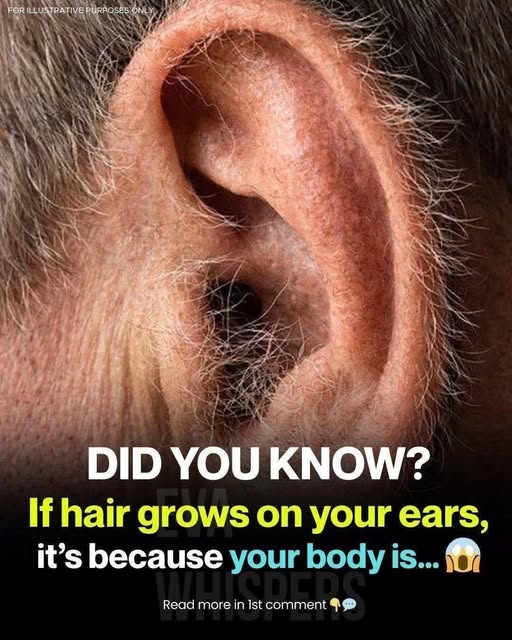
Health Insights: Understanding Ear Hair Growth, Hormonal Shifts, and Aging
As men age, they often notice subtle yet surprising changes in how and where hair grows on their body. While hair on the scalp may begin to thin or gray over time, hair in unexpected places—such as inside the ear canal, along the outer ear rim (pinna), and across the eyebrows—frequently becomes thicker, longer, and more coarse.
Across social media and online health communities, sensationalized headlines often frame ear hair growth as a mysterious sign of aging or health shifts. Far from being a cause for alarm, increased ear hair is a well-understood biological phenomenon driven primarily by hormonal sensitivity, genetics, and natural aging processes. Examining the underlying biology of ear hair growth provides clear clarity on why it happens, what it signifies for overall health, and how to manage it safely.
The Biology Behind Ear Hair Growth
To understand why ear hair sprouts as men age, it helps to examine how hair follicles respond to circulating hormones throughout different life stages.
                 ┌────────────────────────────────────────┐
                 │     BIOLOGICAL DRIVERS OF EAR HAIR     │
                 └───────────────────┬────────────────────┘
                                     │
         ┌───────────────────────────┼───────────────────────────┐
         ▼                           ▼                           ▼
┌─────────────────┐         ┌─────────────────┐         ┌─────────────────┐
│ Testosterone &  │         │ Follicular      │         │ Prolonged Anagen│
│ DHT Sensitivity │         │ Transformation  │         │ Growth Phase    │
│ • Hormonal      │         │ • Vellus to     │         │ • Hair grows    │
│   shifts        │         │   terminal hair │         │   longer        │
└─────────────────┘         └─────────────────┘         └─────────────────┘
1. The Role of Testosterone and Dihydrotestosterone (DHT)
Hair growth across the human body is regulated by androgens, specifically testosterone and its potent byproduct, dihydrotestosterone (DHT). As men age, the relative levels and sensitivity of hair follicles to DHT change. While DHT sensitivity on the scalp can shrink hair follicles (leading to male pattern baldness), the same hormone has the exact opposite effect on follicles in the ears, nose, and eyebrows—stimulating them to grow thicker and more prominent.
2. Transformation of Vellus to Terminal Hair
Humans are born with tiny, nearly invisible, fine hairs called vellus hair covering almost the entire body, including the ears. Over time, under the influence of cumulative hormonal exposure, hair follicles in the ear canal and outer ear rim undergo a transition. They transform into terminal hair follicles, producing longer, darker, and coarser strands.
3. Lengthened Anagen (Growth) Phase
Hair growth occurs in three main cycles: anagen (growth), catagen (transition), and telogen (resting/shedding). With advancing age, the anagen phase for ear hair follicles extends significantly, allowing the hair to grow for much longer periods before naturally falling out.
Why Ear Hair Serves a Protective Function
While noticeable ear hair is often viewed purely through a cosmetic lens, hair inside the ear canal actually serves an important physiological purpose:
- Particle Shield: Tiny hairs lining the outer external auditory canal act as a natural mechanical barrier, trapping dust, dirt, debris, and small insects before they can reach the delicate eardrum.
- Wax Retention & Moisture Balance: Ear hair works alongside cerumen (earwax) to coat the ear canal, protecting against excess moisture, bacterial buildup, and fungal infections.
Readers interested in men’s health and wellness can also explore our practical guide on healthy aging habits for long-term vitality.
Common Myths vs. Medical Facts
Sensationalized online claims sometimes connect ear hair growth to serious underlying medical conditions. Medical experts help separate fiction from fact:
Key Insight: Excessive ear hair growth is primarily a benign, hereditary condition related to aging and androgen sensitivity. It is not a direct indicator of disease or metabolic failure.
| Common Myth | Medical Reality |
| “Ear hair means rapid aging.” | Ear hair is a normal hormonal response to aging, influenced heavily by genetics and testosterone sensitivity. |
| “Plucking ear hair is completely safe.” | Plucking hairs deep inside the ear canal can cause micro-tears, leading to painful infections (otitis externa). |
| “Shaving makes ear hair grow back thicker.” | Shaving cuts the hair shaft at a blunt angle, creating the illusion of thickness, but does not alter follicle growth rates. |
Safe and Effective Ways to Manage Ear Hair
If ear hair becomes a aesthetic concern or causes physical discomfort, several safe grooming techniques are available:
- Use an Electric Trimmer: Electric ear and nose trimmers with rounded, shielded heads are the safest tool for shortening hair inside the ear canal without chancing cuts or skin damage.
- Professional Grooming Scissors: Micro-scissors with blunt, rounded tips can be used to trim stray hairs along the outer ear rim (pinna) safely.
- Professional Laser Hair Removal: For a permanent reduction, laser hair removal targeting the outer ear rim can effectively reduce hair density over multiple sessions.
- Avoid Inserting Sharp Tools: Never insert pointed tweezers, razor blades, or sharp scissors deep into the ear canal, as a sudden slip can puncture the eardrum or damage sensitive skin.
For additional grooming and personal care advice, check out our comprehensive guide on safe home grooming routines for men.
Key Takeaways
- Hormonal Driver: Increased ear hair growth in aging men is driven by hair follicle sensitivity to testosterone and DHT.
- Follicle Transition: Aging causes fine vellus hairs on the ear to convert into thicker, coarser terminal hairs.
- Protective Barrier: Ear canal hair works with earwax to trap dust, debris, and microbes away from the ear drum.
- Safe Grooming: Electric trimmers and rounded scissors provide safe management without risking ear canal infections or injury.
Frequently Asked Questions
Why do men grow more ear hair as they age?
As men age, hair follicles in the ears become more sensitive to dihydrotestosterone (DHT), causing fine vellus hair to transform into long, thick terminal hair.
Is growing ear hair a sign of a serious health problem?
No. Ear hair growth is a normal, harmless biological occurrence tied to genetics, androgen levels, and natural aging.
Is it safe to pluck hair from inside your ear?
Plucking hair from deep inside the ear canal is generally not recommended. Pulling hair out by the root leaves open pores that can easily become infected with bacteria or fungi.
Does ear hair affect hearing?
Normally, no. However, if extreme ear hair traps excessive earwax inside the ear canal, it can occasionally lead to earwax impaction, causing temporary muffled hearing until cleaned by a doctor.
What is the safest way to remove unwanted ear hair?
Using a specialized electric trimmer with a rotary head or rounded grooming scissors is the safest method to keep ear hair trimmed without causing skin irritation or inner ear damage.