
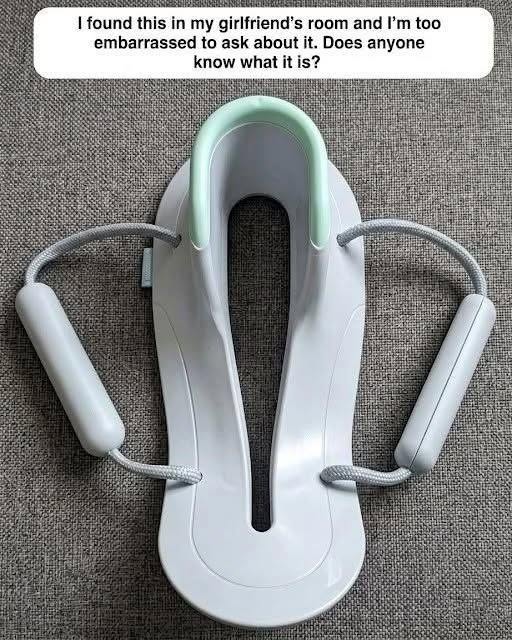
I Found This Mysterious Fitness Device in My Girlfriend’s Room: Here’s What It Actually Does
Stumbling across an unfamiliar object in a partner’s room can instantly spark a wave of curiosity, mild confusion, and humorous speculation. When social media users share snapshots of sleek, unorthodox plastic gadgets with curved head supports, built-in handles, and resistance cords, the comment sections inevitably light up with playful guesses and bewildered questions. Far from being a bizarre household mystery or a piece of esoteric equipment, however, this intriguing object is actually a modern home fitness tool designed to revolutionize core workouts.
Known as a core trainer, crunch assistant, or ab trainer with ergonomic neck and head support, this device has quietly surged in popularity among fitness enthusiasts looking to optimize their at-home workout routines. Exploring what this gadget does, how it works, and why traditional abdominal exercises often cause unnecessary strain reveals fascinating insights into modern fitness ergonomics, home gym design, and physical wellness.
The Mystery of Modern Home Fitness Gadgets
The explosion of interest in compact home workout equipment over recent years has transformed living rooms into mini-gyms. Manufacturers are constantly designing specialized tools intended to solve specific ergonomic pain points during exercise.
When an unusual piece of fitness gear sits in a bedroom or home office, it often looks alien to anyone unfamiliar with recent training innovations. Social media posts featuring these unique devices frequently go viral because they combine relatable curiosity with a visually striking design. Instead of a bulky bench or heavy weight stack, modern fitness gear often features minimalist, portable designs crafted for maximum efficiency in small spaces.
What Is an Ab Trainer With Neck and Head Support?
At first glance, the device features a contoured base, a curved upper cradle designed to fit the head or neck, and lateral handles or resistance attachments. Its primary purpose is to provide structural guidance and support during floor-based core exercises, specifically crunches and sit-ups.
                 ┌────────────────────────────────────────┐
                 │     ANATOMY OF THE CORE TRAINING TOOL  │
                 └───────────────────┬────────────────────┘
                                     │
         ┌───────────────────────────┼───────────────────────────┐
         ▼                           ▼                           ▼
┌─────────────────┐         ┌─────────────────┐         ┌─────────────────┐
│ Ergonomic Head  │         │ Contoured Base  │         │ Lateral Handles │
│ Cradle          │         │ • Guides form   │         │ & Cords         │
│ • Eliminates    │         │ • Protects      │         │ • Adds upper    │
│   neck strain   │         │   lower back    │         │   body leverage │
└─────────────────┘         └─────────────────┘         └─────────────────┘
Rather than forcing the neck muscles to pull the upper body upward during a crunch—a common flaw that leads to soreness and fatigue—the device cradles the head, allowing the abdominal muscles to perform the lifting work in isolation.
- Targeted Core Engagement: By supporting the cervical spine, the tool ensures that the rectus abdominis and oblique muscles contract fully without unnecessary neck flexing.
- Form Correction: The curved geometry naturally guides the user into an optimal range of motion, preventing momentum cheating during repetitions.
- Portability: Lightweight and compact, it slides easily under a bed or into a closet when not in use.
Readers interested in expanding their home workout capabilities can also explore our guide on building an efficient, space-saving home gym.
Why Traditional Crunches Often Cause Neck Strain
Anyone who has ever attempted a high-rep abdominal workout is likely familiar with the dreaded post-exercise neck ache. This discomfort happens because of a fundamental biomechanical flaw in how many people perform bodyweight crunches.
When individuals grow tired during a set of sit-ups, they instinctively clasp their hands behind their head and pull upward with their arms and neck. The cervical spine is forced into a sharp, unsupported forward bend. The delicate muscles in the neck end up doing the heavy lifting that should rightfully be handled by the abdominal core.
Key Insight: A proper core exercise should challenge your abdominals without straining your neck. Using ergonomic support tools bridges the gap between effective muscle engagement and safe spinal alignment.
For those looking to deepen their understanding of safe fitness practices, exploring our comprehensive overview of core stabilization techniques offers valuable biomechanical insights.
How Innovative Core Trainers Protect Your Spine
Ergonomic exercise aids are engineered to protect the body from repetitive strain injuries. By distributing the load evenly across supportive pads, these devices alter the physics of standard bodyweight movements.
1. Reducing Cervical Hyperextension
The padded head cradle acts as an extension of the spine, maintaining neutral alignment throughout the crunch movement. This eliminates the jerking motions that frequently cause muscle stiffness in the upper back and neck.
2. Supporting Lower Back Stability
Many core trainers also feature base designs that stabilize the pelvis, preventing excessive arching in the lumbar spine. This ensures that the lower back remains safely anchored against the floor during intense core contractions.
Expanding Your Home Workout Routine Beyond Sit-Ups
One of the most appealing aspects of modern versatile fitness tools is their multi-functional design. These gadgets are rarely limited to just one exercise.
                 ┌────────────────────────────────────────┐
                 │       VERSATILE TRAINING MODES         │
                 └───────────────────┬────────────────────┘
                                     │
         ┌───────────────────────────┼───────────────────────────┐
         ▼                           ▼                           ▼
┌─────────────────┐         ┌─────────────────┐         ┌─────────────────┐
│ Abdominal       │         │ Elevated Push-  │         │ Arm & Shoulder  │
│ Crunches        │         │ Ups             │         │ Dips            │
│ • Isolated core │         │ • Enhanced chest│         │ • Upper body    │
│   contractions  │         │   depth         │         │   strength      │
└─────────────────┘         └─────────────────┘         └─────────────────┘
By flipping or repositioning the device, users can easily transition into other upper-body movements:
- Elevated Push-Ups: Placing hands on the handles or frame provides an elevated range of motion, deepening chest engagement during push-ups.
- Tricep Dips: The sturdy base can support body weight for modified dips, targeting the triceps and shoulders.
- Resistance-Assisted Stretches: Utilizing the attached cords allows for gentle upper-body resistance training and mobility warm-ups.
Fitness enthusiasts looking to diversify their routine may also want to explore our practical guide on effective bodyweight training circuits for full-body conditioning.
The Psychology of Finding Unusual Fitness Equipment at Home
Discovering a specialized fitness tool in a partner’s room often triggers humorous misunderstandings simply because exercise gear looks remarkably different from traditional household items. In an era where micro-fitness trends and viral wellness gadgets dominate social media feeds, finding innovative tools tucked away in a bedroom is becoming increasingly common.
Rather than a cause for awkward embarrassment, uncovering such a gadget usually points to a shared interest in health, self-improvement, and home wellness routines. A simple, lighthearted conversation about fitness goals can quickly clear up any mystery and perhaps even inspire a new workout partner!
Practical Tips for Getting the Most Out of Core Trainers
If you decide to incorporate an ab trainer with neck support into your routine, keeping a few best practices in mind will maximize your results:
- Focus on Controlled Movements: Avoid rushing through repetitions. Slow, deliberate contractions yield much better muscle engagement than fast, momentum-driven crunches.
- Breathe Properly: Exhale sharply as you crunch upward to contract the transverse abdominis, and inhale deeply as you lower back down.
- Combine With Overall Conditioning: Core trainers are fantastic for abdominal endurance, but optimal physical health relies on a balanced routine that includes cardiovascular exercise, flexibility work, and full-body strength training.
Conclusion
Finding an unfamiliar fitness device in your girlfriend’s room might initially leave you with more questions than answers, but the mystery is easily solved. Far from anything complicated or unusual, it is a smart, ergonomic core-training tool designed to protect the neck and maximize abdominal workouts. Understanding what these gadgets do highlights the wonderful ways modern fitness innovation continues to make home workouts safer, more comfortable, and more effective.
Key Takeaways
- Targeted Fitness Tool: The device is an ergonomic core trainer or crunch assistant built to support the head and neck during sit-ups.
- Prevents Strain: Proper head cradling eliminates painful cervical hyperextension common in traditional bodyweight crunches.
- Multi-Functional Design: Many models double as push-up bars and support equipment for upper-body conditioning.
- Home-Friendly Fitness: Compact and portable, these tools are ideal for efficient, space-saving home workouts.
Frequently Asked Questions
What is the device found in the image actually used for?
It is a core exercise tool—specifically an ab trainer with integrated neck and head support designed to assist with crunches, sit-ups, and upper-body conditioning.
Does an ab trainer with neck support actually prevent neck pain?
Yes. By supporting the weight of the head and maintaining neutral cervical spine alignment, it stops the neck muscles from over-flexing during abdominal exercises.
Can beginners use core training support tools?
Absolutely. These devices are suitable for all fitness levels, helping beginners maintain proper form while protecting against common strains.
Are core trainers difficult to store at home?
No. Most models feature lightweight, compact designs that easily slide under a bed, fit into a closet, or pack away for travel.
What other exercises can you perform with this fitness device?
Depending on the specific model, users often flip or reposition the device to assist with push-ups, tricep dips, and stretching routines.