
The Irony of Undermining Others: A Lesson in Interdependence
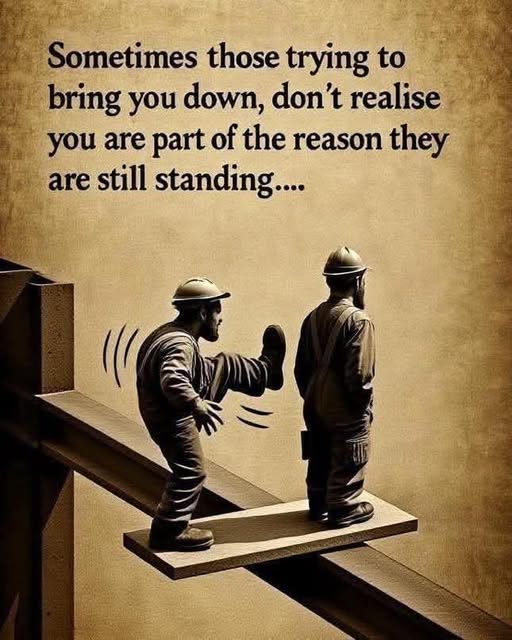
Human relationships and professional environments can sometimes become complex webs of competition. As brilliantly captured in image_606704.jpg, a striking visual metaphor shows one worker attempting to kick another off a wooden plank, completely unaware that the weight and position of the person they are trying to remove is what keeps the entire structure balanced. This powerful imagery serves as a timeless reminder: before trying to undermine someone else, we must look closer at how our own stability might depend on them.
The Dynamics of Unintended Consequences
In workplaces, social circles, and collaborative projects, individuals occasionally act out of frustration or rivalry without considering the broader ecosystem.
- The Illusion of Independence: People who attempt to pull others down often operate under the false assumption that they operate in a vacuum, ignoring shared foundations.
- Mutual Support: Just like the balancing plank in the image, many competitive environments rely on collective effort, diverse skills, and mutual support to keep everyone afloat.
If you are interested in exploring team dynamics and collaborative psychology, you might find it useful to read our guide on how to foster a healthy, cooperative environment in professional spaces.
Shifting Focus from Competition to Collaboration
Real growth rarely comes from tearing others down; instead, it flourishes through mutual elevation and shared success.
- Recognize Shared Value: Appreciate the contributions of colleagues and peers rather than viewing every relationship through a zero-sum lens.
- Evaluate Long-Term Impact: Consider how actions driven by short-term frustration can destabilize your own position or project.
- Build Bridges Instead of Burning Them: Cultivating strong alliances creates a secure foundation that benefits everyone involved.
If you are evaluating your professional communication or trying to improve your collaborative skills, our resource on how to build strong, supportive professional networks offers great practical advice.
Comparison: Competition vs. Collaboration
| Approach | Focus | Long-Term Outcome |
| Destructive Competition | Undermining peers for short-term gain | Instability and mutual downfall |
| Healthy Collaboration | Shared goals and mutual support | Collective growth and structural stability |
Common Misconceptions
A common misconception is that stepping on others is a necessary shortcut to personal success. In reality, modern workplaces and social structures are deeply interconnected; damaging a teammate or partner often creates a ripple effect that compromises your own stability.
- Fact: Emotional intelligence and collaborative problem-solving are far more reliable drivers of long-term career success than ruthless competition.
When to Seek Professional Leadership or Conflict Coaching
Navigating toxic environments or chronic workplace rivalry can be mentally draining. If you find yourself trapped in difficult professional dynamics or struggling to build healthy working relationships, consulting a professional leadership coach or career counselor can offer valuable strategies.
To learn more about finding expert guidance for workplace challenges, check out our guide on how to choose the right career coach for your professional goals.
Conclusion
Images like the one in image_606704.jpg offer a profound mirror for human behavior. Before acting out of impulse or rivalry, it pays to pause and think twice. Preserving the stability of those around us often ensures our own secure footing in the journey ahead.
FAQ
1. What is the main message behind the image of the two workers?
It highlights the irony of sabotage, showing that people who try to pull others down often fail to realize that their own stability depends on them.
2. Why do people try to undermine others in professional settings?
Insecurities, perceived competition, and a zero-sum mindset often drive individuals to act against their peers.
3. How can I handle toxic competition at work?
Focus on your own performance, maintain clear professional boundaries, and foster alliances with supportive colleagues.
4. Is competition always a bad thing?
Healthy, constructive competition can inspire innovation, but destructive rivalry that harms others is counterproductive.
5. How does interdependence manifest in modern teams?
Most projects require a diverse combination of skills where no single person can succeed entirely alone.
6. What does “burning bridges” mean in this context?
It refers to damaging relationships or alienating colleagues in a way that destroys future opportunities for collaboration.
7. How can emotional intelligence prevent workplace conflict?
Emotional intelligence helps individuals recognize the motivations behind actions and choose empathy and cooperation over impulse.
8. Where can I read more about psychological safety in teams?
Exploring books and articles on organizational psychology by experts like Amy Edmondson provides deep insights into collaborative success.