
The Great Climb: Reflecting on the Stages and Meaning of Life
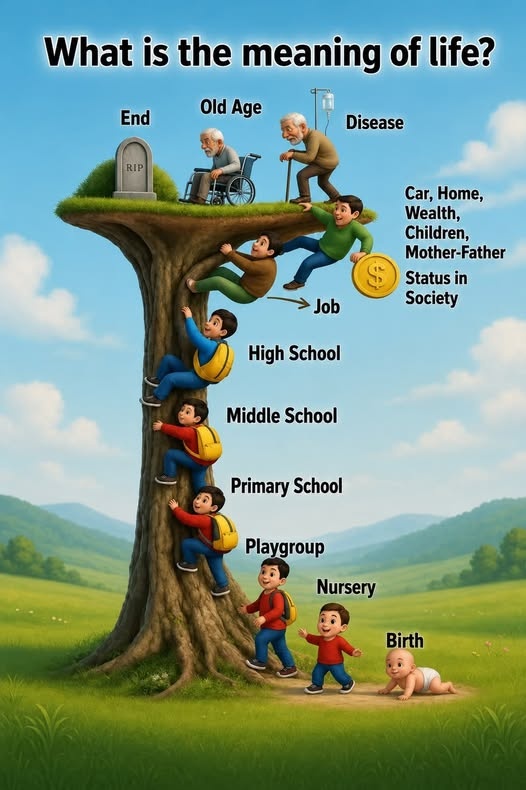
Life is frequently described as a journey, but visual metaphors often capture its essence in striking ways. As illustrated in image_60c825.jpg, human existence is mapped out as an upward climb along the trunk of a tree. Starting from birth at the roots and ascending through educational milestones, professional pursuits, and material achievements, the journey ultimately leads toward old age and its final chapters. This evocative imagery prompts a timeless question: what are we really striving for in this journey?
The Stages of the Climb
The progression depicted in the visual journey reflects the structured path that many societies follow:
- Early Foundations: The climb begins at infancy and moves rapidly through nursery, playgroup, primary, middle, and high school, representing the formative years of learning and growth.
- The Adult Hustle: As the climber reaches adulthood, the focus shifts toward securing a job, building a career, and acquiring material markers of success such as a car, home, wealth, family, and social status.
- The Peak and Decline: Near the top of the tree, the figures encounter the realities of aging, disease, and eventually the end represented by a gravestone marker.
If you are interested in exploring philosophical perspectives on time and human purpose, you might find it useful to read our guide on how different cultures view the stages of human life.
Material Milestones Versus Internal Fulfillment
As climbers near the upper branches, they accumulate symbols of worldly success—wealth, status, and family. However, the juxtaposition of these achievements right alongside physical decline and mortality raises deep existential questions.
- The Pursuit of Success: Society often measures achievement by career titles, financial portfolios, and societal recognition.
- The Reality of Impermanence: The top of the tree reminds us that physical markers of success do not travel beyond the final milestone.
- Redefining Purpose: Many philosophers argue that the true meaning of the journey lies not in reaching the top of the tree, but in the experiences, connections, and personal growth gathered along the bark.
If you are evaluating your personal goals and work-life balance, our resource on how to align your daily habits with your core personal values offers great practical advice.
Comparison: Societal Expectations vs. Personal Meaning
| Aspect | Societal Focus | Personal Reflection |
| Milestones | Degrees, jobs, houses, wealth | Relationships, peace of mind, self-discovery |
| Pacing | Constant upward rush | Valuing the present moment |
| Endpoint | Legacy of material accumulation | Legacy of character and human connection |
Common Misconceptions
A common misconception is that life is a race to the top where winning means having the most possessions at the finish line. In reality, the climb is universal, and every stage—from childhood wonder to mature reflection—holds intrinsic value.
- Fact: Mental health and emotional fulfillment are far stronger indicators of life satisfaction than material accumulation alone.
When to Seek Philosophical or Psychological Guidance
Reflecting on mortality, life direction, and personal meaning can sometimes feel overwhelming. If you find yourself grappling with existential questions or seeking a deeper sense of purpose, speaking with a life coach, counselor, or philosophical mentor can provide valuable clarity.
To learn more about finding expert guidance for personal growth, check out our guide on how to choose the right life coach or counselor for your journey.
Conclusion
Images like the one in image_60c825.jpg serve as powerful mirrors for the human condition. While the climb from birth to old age is inevitable, what we choose to value along the branches remains entirely up to us. Striving for success is natural, but cherishing the moments spent climbing with others gives the journey its true meaning.
FAQ
1. What does the tree represent in life metaphors?
The tree symbolizes growth, endurance, and the natural structure of life expanding from roots to branches.
2. Why do people focus so much on material wealth during their climb?
Society often equates material stability and status with security and personal achievement.
3. How can I find more meaning in my daily routine?
Focusing on meaningful relationships, mindfulness, and personal passions can help ground your daily life in deeper purpose.
4. Is it normal to feel anxious about aging?
Yes, reflecting on aging and mortality is a natural part of human self-awareness and emotional maturity.
5. What is the main message behind the visual tree climb?
It highlights the rapid progression of life’s stages from birth to mortality, encouraging viewers to ponder what truly matters.
6. Can life goals change as we move through different stages?
Absolutely; what matters in high school or early career often shifts dramatically by middle and older age.
7. How do different generations view success?
Younger generations increasingly prioritize flexibility, mental health, and experiences over traditional corporate milestones.
8. Where can I read more about the philosophy of life’s meaning?
Exploring works by existentialist philosophers like Viktor Frankl or Albert Camus offers profound insights into human purpose.
