Where to Massage Your Dog: A Complete Guide to Dog Massage Techniques
Learn exactly where to massage your dog to relieve stress, improve digestion, boost heart health, and build trust. A complete guide to dog massage techniques for every health benefit.
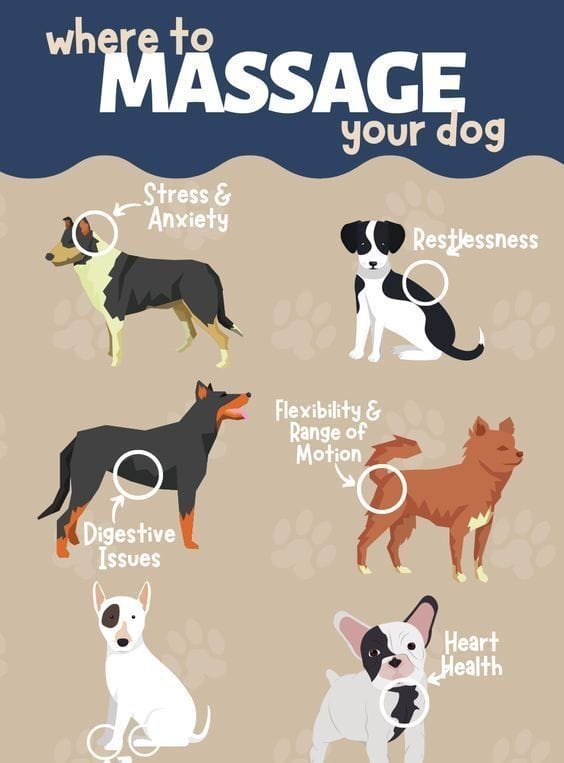
Introduction
Did you know that massage isn’t just for humans? Dogs benefit enormously from regular, targeted massage — and it goes far beyond simple petting. Whether your dog struggles with anxiety, digestive issues, or stiff joints, knowing where to massage your dog can make a real difference in their health and happiness.
In this guide, we’ll walk you through the six key massage zones on your dog’s body, what each one helps with, and how to do it safely at home.
1. Neck — Relieve Stress & Anxiety
The neck area is one of the most powerful pressure points on a dog’s body. Gently massaging the sides and back of the neck can help calm an anxious or stressed dog almost immediately.
Dogs carry a lot of tension in their neck muscles, especially when they feel threatened, overstimulated, or nervous. Slow, circular strokes along the neck can activate the parasympathetic nervous system, helping your dog relax.
Best for: Dogs with separation anxiety, fear of loud noises, or general nervousness.
How to do it: Use your fingertips to make slow, gentle circles along both sides of the neck, moving from behind the ears down toward the shoulders. Keep your movements calm and steady.
2. Shoulder Area — Reduce Restlessness
If your dog can’t seem to settle down — pacing, circling, or unable to sleep — the shoulder muscles may hold the answer. Massaging this area helps release built-up tension that contributes to restless behavior.
Dogs use their shoulders constantly during walks, play, and daily movement, making this zone prone to tightness. A good shoulder massage promotes physical and mental relaxation at the same time.
Best for: Hyperactive dogs, dogs that struggle to sleep, or those recovering from intense exercise.
How to do it: Place both hands on your dog’s shoulders and apply gentle, kneading pressure using your palms and fingers. Work in slow, rhythmic movements toward the base of the neck.