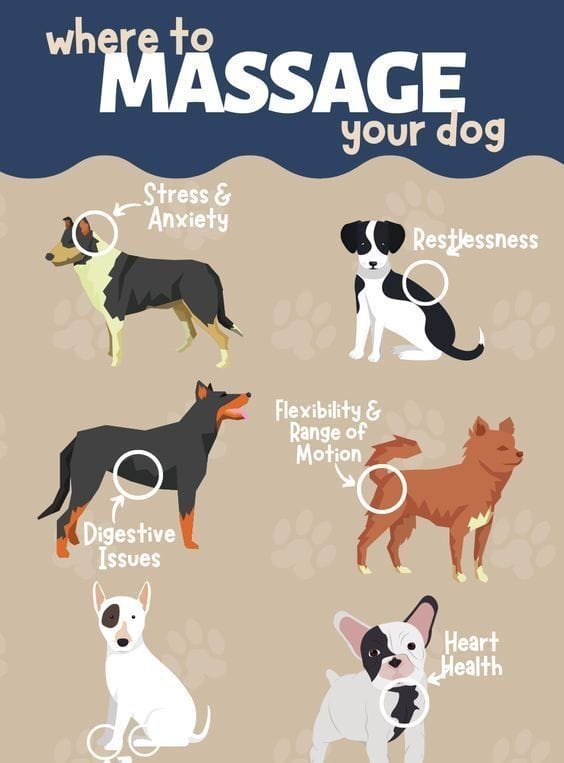
Where to Massage Your Dog: A Complete Guide to Dog Massage Techniques
3. Belly & Abdomen — Ease Digestive Issues
Stomach massage is a well-known technique for helping dogs experiencing digestive discomfort, bloating, or constipation. Gentle strokes along the belly stimulate the digestive tract and can help move things along naturally.
This is especially useful after a heavy meal or if your dog seems uncomfortable and is licking their lips or looking at their belly.
Best for: Dogs with constipation, gas, mild bloating, or slow digestion.
How to do it: With your dog lying on their back or side, use flat palms to make gentle clockwise circles on the belly. Never apply strong pressure, and stop immediately if your dog shows signs of discomfort.
⚠️ Important: If your dog shows signs of severe bloating or pain, contact your veterinarian immediately — this can be a medical emergency.
4. Hips & Hindquarters — Improve Flexibility & Range of Motion
The hip and hindquarter area is a critical zone for dogs of all ages, but especially for older dogs or breeds prone to hip dysplasia. Regular massage in this region improves flexibility, circulation, and range of motion.
Many dogs develop stiffness in their hips over time, especially large breeds or those with arthritis. Massage here can complement veterinary treatment and help your dog move more comfortably.
Best for: Senior dogs, large breeds, dogs with arthritis or hip dysplasia, or highly active dogs.
How to do it: Using both thumbs, apply gentle, circular pressure along the hip muscles and upper thighs. Work slowly and watch your dog’s reaction — they’ll let you know if it feels good!