The Hidden Danger of Treat-Based Training: Why Your Dog Only Obeys When You Have Treats
If your dog suddenly develops selective hearing the moment your treat pouch is empty, you’re not alone. Thousands of dog owners face this frustrating reality every day: a perfectly obedient dog transforms into a stubborn rebel the second they realize no food is coming.
But here’s the uncomfortable truth most trainers won’t tell you: you might have accidentally trained your dog to only work for food.
The Treat Trap: How Good Intentions Backfire
Treat-based training isn’t inherently bad. In fact, it’s one of the most effective ways to teach new behaviors. The problem starts when treats become the only reason your dog listens to you.
Think about it from your dog’s perspective. If you’ve spent months rewarding every “sit” with a piece of chicken, your dog hasn’t learned to sit on command. They’ve learned that certain actions produce food, but only when you’re holding the magic bag.
This creates what behaviorists call “stimulus control failure.” Your dog is obeying the treat, not you.
Why This Happens (And Why It’s Not Your Fault)
Most dog training advice follows a simple formula: reward good behavior, ignore bad behavior. What they often skip is the crucial transition phase, where you gradually reduce treat dependency.
Here’s what typically happens: You teach “sit” with treats and see immediate success. You continue using treats for weeks or months because it works so well. Then you try to phase out treats, but your dog stops responding. Frustrated, you go back to treats because you need your dog to listen.
You’re now stuck in the treat cycle, and your dog has learned that obedience is optional unless food appears.
The Real Cost of Treat Dependency
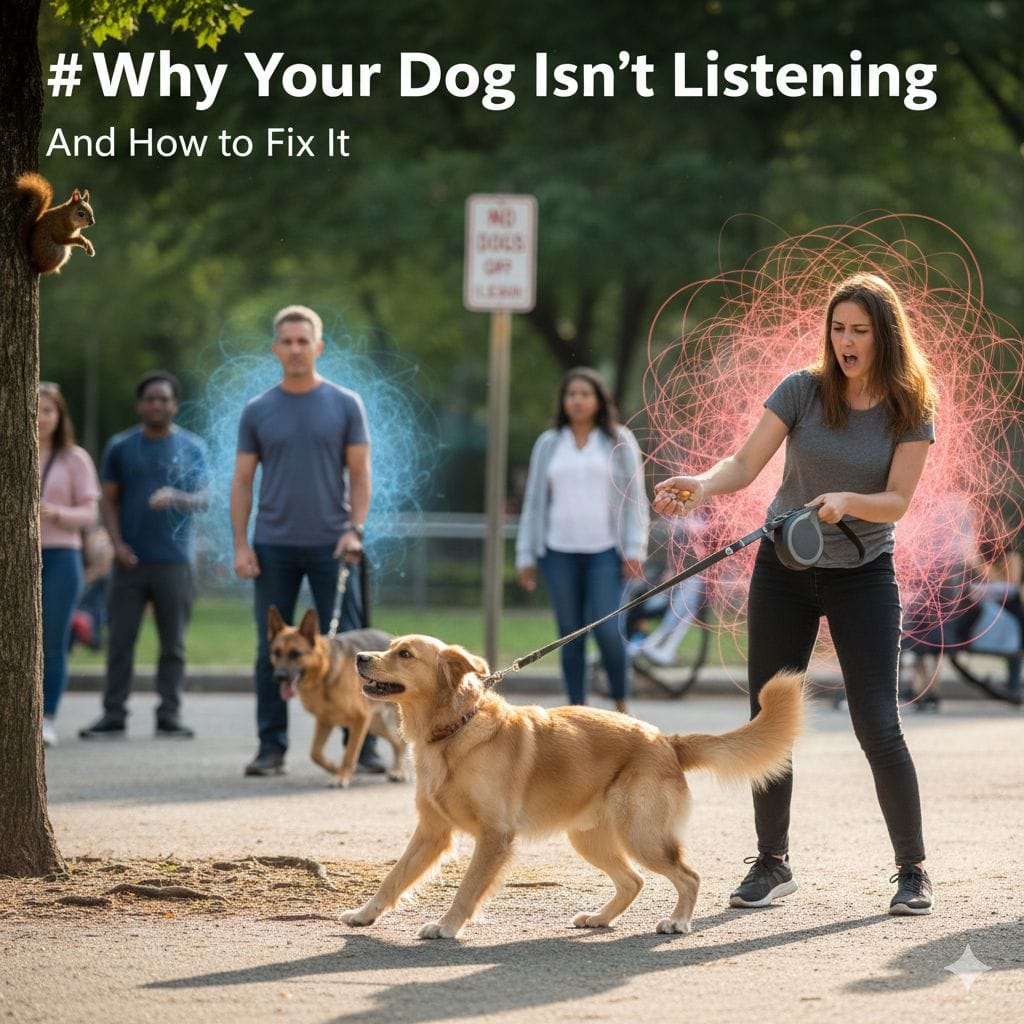
Beyond the inconvenience, treat-dependent training creates serious problems. When your dog won’t come when called without a treat visible, you can’t rely on recall in emergencies. A squirrel, another dog, or a busy street becomes a genuine danger.
Dogs who only obey for treats often develop other attention-seeking behaviors. They learn that compliance is transactional, not a baseline expectation. Your bond with your dog shouldn’t be based on bribery. Dogs are social animals who naturally want to cooperate with their pack, but constant treats can actually undermine this instinct.
Constantly carrying high-value treats gets expensive, and many dogs become picky, demanding better and better rewards.
The Science Behind Better Training
Research in animal behavior shows that the most reliable obedience comes from variable reinforcement schedules, not constant rewards. This means sometimes rewarding, sometimes not, in an unpredictable pattern.
Studies also demonstrate that dogs who are trained with a mix of rewards like praise, play, treats, and life rewards develop more robust and reliable responses than those trained with food alone.
The key is building what trainers call “intrinsic motivation,” where your dog wants to obey because it feels good, strengthens your bond, or leads to something they naturally enjoy.
How to Fix Treat-Dependent Training
If you’re reading this while your treat pouch sits permanently attached to your hip, don’t panic. You can retrain your dog’s response system.
Instead of treats, reward commands with things your dog already loves. Does your dog go crazy for fetch? A good “sit” earns a ball throw. Does your dog live for walks? A solid “stay” means the leash goes on.
Begin rewarding with treats only some of the time. Your dog should never know if this particular “come” will produce food or just enthusiastic praise. This actually makes the behavior stronger because your dog stays engaged, hoping this might be the time.
Make sure your dog can hold commands for longer periods before you start fading treats. A dog who sits for 30 seconds is better prepared for treat-free obedience than one who barely holds it for 3 seconds.
Practice commands in progressively challenging environments without treats. Start in your quiet living room, then your backyard, then a park. Your dog needs to generalize that commands apply everywhere, not just in treat-friendly zones.
Teach your dog that obedience unlocks the things they want. Sitting nicely gets the door opened. Staying calm gets them greeted. Coming when called means they get to go sniff that interesting spot.
The Role Treats Should Actually Play
This isn’t about eliminating treats entirely. Treats remain valuable for teaching brand new behaviors, reinforcing excellent performance, and maintaining motivation during challenging training.
The difference is that treats become one tool among many, not the only language your dog understands.
Think of treats like a paycheck bonus at work. You don’t only work on days when bonuses are guaranteed, because you have other reasons to show up: responsibility, relationships, purpose, and yes, the regular salary. Your dog needs that same diversified motivation system.
Red Flags Your Dog Is Treat-Dependent
Watch for these warning signs that treats have become a crutch. Your dog looks at your hands or pockets before responding to commands. Performance drops dramatically when you run out of treats mid-walk. Your dog “shops around” for commands, only obeying if they think the reward is worth it. You feel anxious about training sessions without treats present. Your dog ignores you completely in distracting environments unless you have food.
Building Real Obedience: A Better Approach
The most obedient dogs aren’t working for treats. They’re working because they’ve learned that cooperating with their human leads to good things, that training is fun, and that their handler is worth paying attention to.
This kind of relationship requires consistency. Your dog needs to understand that commands aren’t suggestions. Following through every time builds reliability.
Make yourself more interesting than the environment. Play with your dog, use varied tones, and show genuine excitement when they get it right.
Dogs thrive on clarity. Fuzzy commands and inconsistent expectations create dogs who tune out.
Retraining takes time. Your dog has learned a pattern, and changing that pattern requires consistent effort over weeks, not days.
The Controversial Truth
Here’s what makes some trainers uncomfortable: purely positive, treat-only training has limitations. Dogs are complex animals who respond to social pressure, environmental feedback, and intrinsic rewards just as much as food.
This doesn’t mean harsh corrections or punishment. It means acknowledging that your relationship with your dog should be built on more than food transactions.
Your dog should listen because you matter, because working together is rewarding, and because ignoring you has natural consequences like missing out on fun activities.
Moving Forward
If you’re facing a treat-dependent dog, start today by identifying one command you’ll begin transitioning. Choose something your dog knows well and start practicing the variable reinforcement approach.
Remember that this process builds stronger, more reliable obedience. You’re not depriving your dog; you’re giving them the gift of understanding that your relationship is about partnership, not just payment.
The goal isn’t a dog who never gets treats. It’s a dog who listens because they’re connected to you, engaged with you, and trust that good things happen when they pay attention to you, whether or not you’re holding food.
That’s not just better training. That’s a better relationship.