Homemade Tomato Sauce Recipe: Safe, Fresh, and Better Than Store-Bought
The Kitchen Revelation That Changed Everything
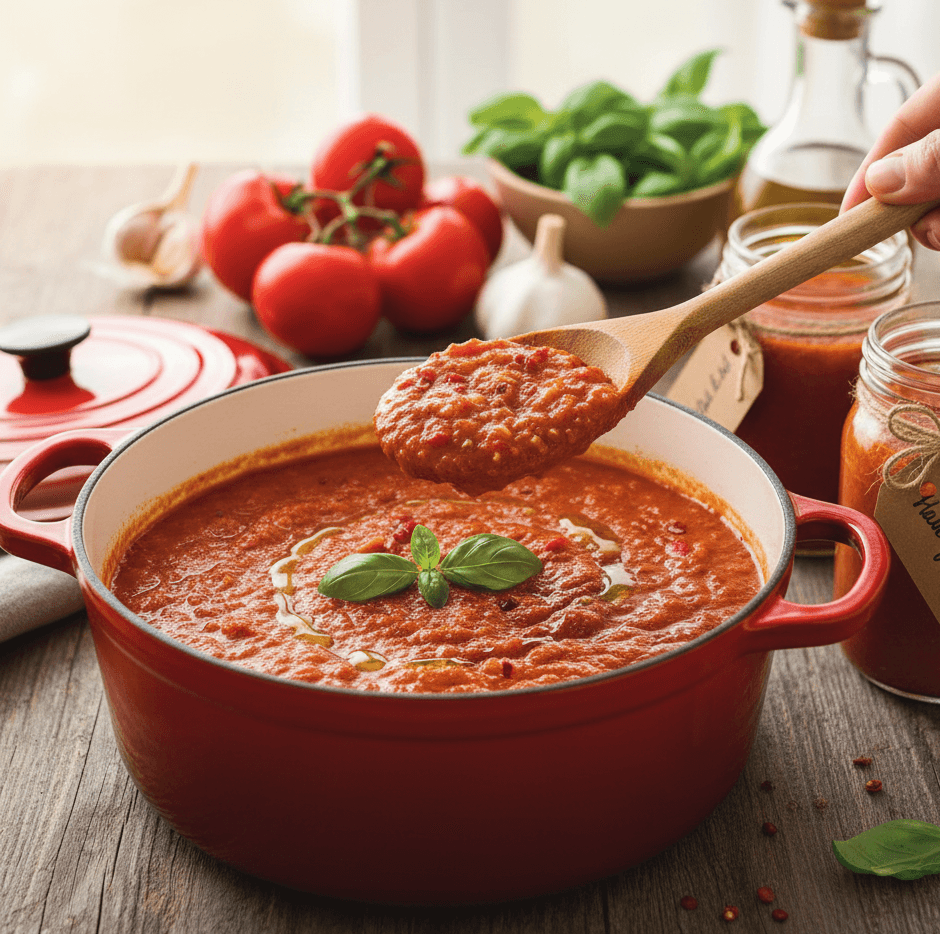
When news broke about various tomato sauce recalls due to botulism concerns, my mom called me in a panic—she’d just stocked up on jarred sauce during a sale. As we talked through her pantry, I realized this was the perfect moment to teach her my foolproof homemade tomato sauce recipe. Two hours later, she called back, amazed at how simple, delicious, and safe making sauce from scratch could be. Now she won’t go back to store-bought, and after you try this recipe, you won’t either.
Introduction: Why Homemade Sauce Is Your Kitchen’s Best Friend
With recent concerns about food safety and jarred tomato sauce, more Americans are discovering the joy of making their own pasta sauce at home. This easy homemade tomato sauce recipe isn’t just safer—it’s fresher, more flavorful, and surprisingly quick to make. You control every ingredient, avoid preservatives, and create a versatile base that works for pasta, pizza, meatballs, or even as a dipping sauce.
This recipe takes just 45 minutes from start to finish, uses simple pantry staples, and can be made in big batches for freezing. Whether you’re worried about food recalls or just want the absolute best-tasting sauce, this from-scratch Italian tomato sauce delivers restaurant-quality results without any of the food safety concerns that come with mass-produced products.
Plus, there’s something incredibly satisfying about simmering your own sauce—your kitchen will smell like an Italian grandmother’s house, and that’s priceless!
Ingredients You’ll Need
For the Basic Tomato Sauce:
- 3 lbs fresh Roma tomatoes (about 12-15 tomatoes) OR 2 cans (28 oz each) whole peeled San Marzano tomatoes
- 3 tbsp extra virgin olive oil
- 1 medium yellow onion, finely diced
- 6 cloves garlic, minced
- 2 tbsp tomato paste
- 1 tsp granulated sugar (balances acidity)
- 1½ tsp sea salt (or to taste)
- ½ tsp black pepper, freshly ground
- 1 tsp dried oregano
- 1 tsp dried basil (or 6-8 fresh basil leaves)
- ½ tsp red pepper flakes (optional, for a kick)
- 1 cup water or vegetable broth
- 2 tbsp fresh lemon juice or red wine vinegar (for safe acidity)
Optional Flavor Boosters:
- 1 bay leaf
- Fresh parsley, chopped
- Parmesan rind (adds incredible depth!)
- Splash of red wine
Step-by-Step Instructions
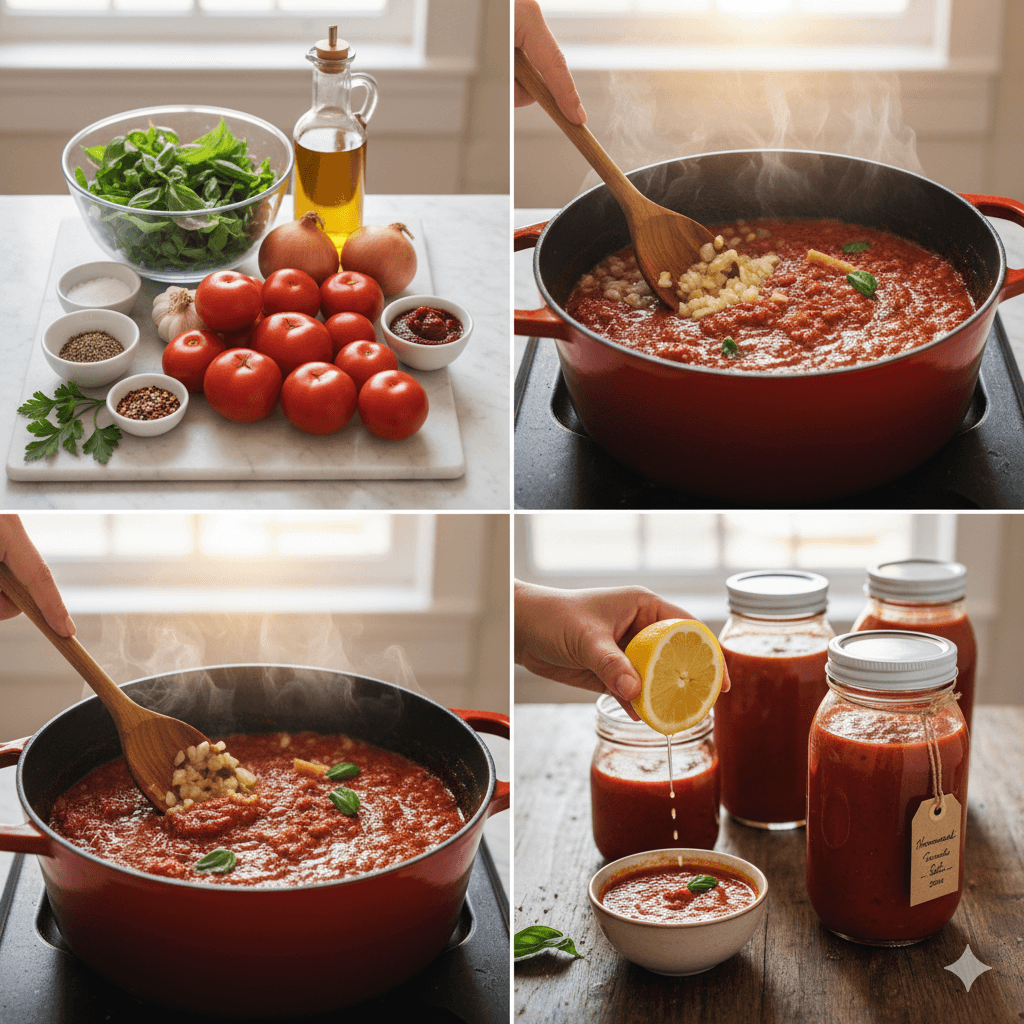
Step 1: Prepare Your Tomatoes If using fresh tomatoes, bring a large pot of water to boil. Score an “X” on the bottom of each tomato. Blanch them for 60 seconds, then transfer to an ice bath. The skins will peel right off—so satisfying! Roughly chop the peeled tomatoes. If using canned tomatoes, simply crush them with your hands or a potato masher. Easy peasy!
Step 2: Sauté the Aromatics Heat the olive oil in a large, heavy-bottomed pot or Dutch oven over medium heat. Add the diced onion and sauté for 5-6 minutes until soft and translucent. This builds the flavor foundation. Add the minced garlic and cook for another minute until fragrant—don’t let it brown or it’ll taste bitter.
Step 3: Build the Base Stir in the tomato paste and cook for 2 minutes, stirring constantly. This step caramelizes the paste and adds deep, rich flavor to your sauce. You’ll notice the color darkening—that’s exactly what you want!
Step 4: Add the Tomatoes Pour in your prepared tomatoes (fresh or canned) along with the water or broth. Stir everything together, scraping up any delicious brown bits from the bottom of the pot. Add the sugar, salt, pepper, oregano, basil, and red pepper flakes if using.
Step 5: Simmer to Perfection Bring the sauce to a gentle boil, then reduce heat to low. Let it simmer uncovered for 30-40 minutes, stirring occasionally. The sauce should reduce and thicken beautifully. If using a bay leaf or Parmesan rind, add them now for extra flavor.
Step 6: Final Adjustments After simmering, remove the bay leaf and Parmesan rind if used. Stir in the lemon juice or vinegar—this is crucial for safe acidity levels that prevent bacterial growth. Taste and adjust seasonings. Want it smoother? Use an immersion blender for 10-15 seconds. Prefer it chunky? Leave it as is!
Step 7: Cool and Store Properly If not using immediately, let the sauce cool completely before storing. This is important for safe food preservation! Never put hot sauce directly into containers, as it can create conditions for bacterial growth.
Pro Tips & Chef’s Notes (The Insider Secrets!)
Acidity Is Your Food Safety Friend: The lemon juice or vinegar isn’t just for flavor—it lowers the pH to safe levels (below 4.6) that prevent botulism and other bacterial growth. Never skip this step when making sauce for storage!
Canned vs. Fresh Tomatoes: Honestly? Canned San Marzano tomatoes often taste better than fresh unless you’re using peak-season heirloom tomatoes. They’re picked at perfect ripeness and processed immediately, locking in flavor.
The Sugar Secret: That teaspoon of sugar isn’t about making sauce sweet—it counteracts the natural acidity of tomatoes and creates a more balanced, restaurant-quality flavor.
Storage Guidelines for Safety:
- Refrigerator: Up to 5 days in an airtight container
- Freezer: Up to 6 months in freezer-safe containers or bags (leave 1 inch headspace for expansion)
- Always label with the date!
Scaling Up: This recipe doubles or triples beautifully. Make a big batch and freeze in 2-cup portions—perfect for quick weeknight dinners!
The Parmesan Rind Trick: Save your Parmesan rinds in the freezer! Simmering one in your sauce adds incredible umami depth. Just remove it before serving.
Avoid Aluminum: Cook tomato sauce in stainless steel or enameled cast iron. Aluminum can react with tomatoes’ acidity and create a metallic taste.
Texture Control: Want silky-smooth sauce? Blend completely. Prefer rustic texture? Mash with a potato masher. Love chunky? Leave it rough-chopped!
Nutrition Facts (Per ½ cup serving, recipe makes about 6 cups)
- Calories: 65
- Total Fat: 3.5g
- Saturated Fat: 0.5g
- Cholesterol: 0mg
- Sodium: 310mg
- Total Carbohydrates: 8g
- Dietary Fiber: 2g
- Sugars: 5g
- Protein: 2g
- Vitamin C: 15% DV
- Vitamin A: 12% DV
Nutritional information is approximate and based on using canned tomatoes and standard ingredients.
Understanding Botulism Prevention in Home Cooking
While we never want to scare you away from cooking, it’s important to understand why proper acidity matters. Botulism is caused by bacteria that thrive in low-acid, oxygen-free environments—like improperly canned foods. By adding lemon juice or vinegar to tomato sauce and storing it properly in the refrigerator or freezer (not shelf-canning without proper equipment), you’re creating an environment where these bacteria simply cannot grow.
Safe sauce practices:
- Always use fresh, unblemished tomatoes or reputable canned brands
- Add acid (lemon juice or vinegar) to every batch
- Cool sauce quickly before refrigerating
- Never can at home without a pressure canner and tested recipes
- When in doubt, freeze instead of attempting home canning
Let’s Talk Sauce! 🍝
There you have it—a safe, homemade tomato sauce recipe that’s fresher, healthier, and more delicious than anything you’ll find in a jar! Once you experience the incredible flavor of sauce made from scratch, you’ll wonder why you ever bought the store-bought stuff. And in light of recent food safety concerns, there’s real peace of mind in knowing exactly what goes into your family’s food.
What’s your favorite way to use homemade tomato sauce? Do you prefer it chunky or smooth? Are you team fresh tomatoes or canned? Drop a comment below—I love hearing about your sauce adventures! And if you try this recipe, let me know how it turns out. Tag me on social media with your beautiful sauce creations!
Don’t forget to share this recipe with friends and family who might be concerned about store-bought sauce safety. We’re bringing homemade back, one delicious batch at a time!