He Knows the Command… So Why Doesn’t He Obey?
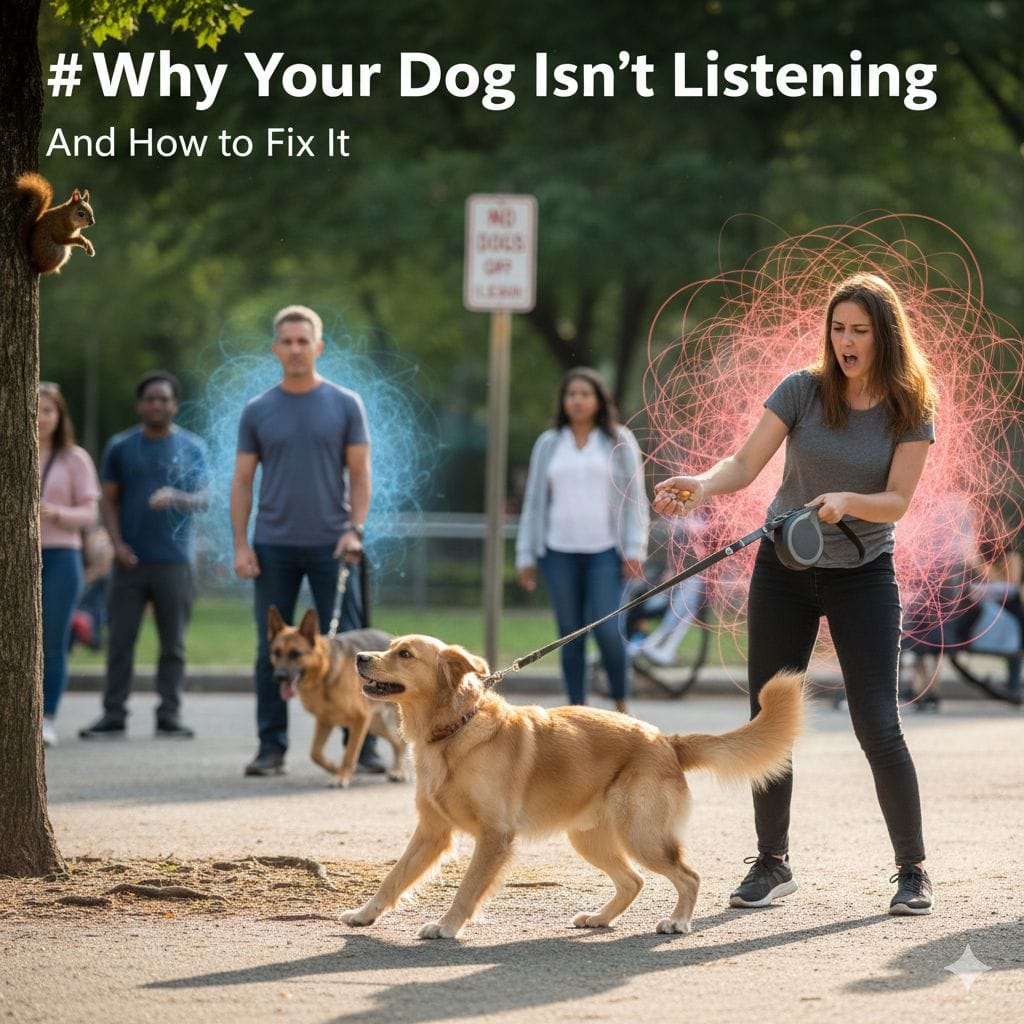
You’ve practiced “sit” a hundred times in your living room. Your dog nails it every single time. But the moment you step outside and see another dog approaching, it’s like your pup has never heard the word before. Sound familiar?

This frustrating scenario happens to nearly every dog owner. Your dog isn’t being stubborn or disrespectful. There’s actual science behind why dogs ignore commands when they’re excited, and understanding it will transform how you train.
The Brain on Excitement: What’s Really Happening
When your dog gets excited, their brain chemistry changes dramatically. The neurotransmitter dopamine floods their system, creating an intense feeling of anticipation and joy. At the same time, their stress hormone cortisol can spike, even during positive excitement.
This chemical cocktail does something important: it shuts down the thinking part of their brain. The prefrontal cortex, where learned behaviors and impulse control live, essentially goes offline. Your dog physically cannot access those well-practiced commands the same way they do when calm.
Think of it like trying to solve a math problem while riding a roller coaster. You know how to do math, but your brain simply can’t focus on it in that moment.
Distance Makes the Heart Grow… Distracted
Dogs learn commands in specific contexts. If you’ve only practiced “sit” in your quiet kitchen, that’s where the behavior is strongest. The dog park, the sidewalk during a walk, or your friend’s house are completely different environments to your dog.
This is called “lack of generalization” in dog training. Commands need to be practiced in dozens of locations, with varying levels of distraction, before your dog truly “knows” them everywhere.
The Attention Threshold: When Training Disappears
Every dog has an attention threshold, the invisible line where arousal becomes so high that learning and responding becomes impossible. Some signs your dog has crossed this threshold include:
- Ignoring high-value treats they normally love
- Unable to make eye contact with you
- Body stiff or movements jerky and frantic
- Excessive panting, whining, or barking
- Pulling intensely on the leash
Once over threshold, your dog genuinely cannot obey. It’s not defiance; it’s biology.
Real Solutions That Actually Work
Start Below Threshold
Instead of practicing recall at the busy dog park, start 100 feet away where your dog can still think. Gradually decrease distance over weeks or months. Slow progress is lasting progress.
Use Higher Value Rewards
That regular kibble won’t cut it during exciting moments. Reserve special treats like chicken, cheese, or hot dogs exclusively for high-distraction training.
Practice the “Emergency U-Turn”
Before your dog gets over-excited, teach them to disengage. When you see a trigger approaching, say “let’s go” cheerfully and turn the opposite direction. Reward generously when they follow. This prevents crossing the threshold in the first place.
Build Impulse Control Through Games
Games like “wait” before meals, “leave it” with toys, and rewarding calm behavior teach your dog that self-control pays off. These skills transfer to exciting situations.
Create a Calm-Down Routine
After exciting experiences, help your dog decompress. A quiet walk, a stuffed Kong, or simply resting in a calm space helps their brain chemistry return to baseline faster.
The Timeline: When Will It Click?
Here’s the truth: building reliable obedience in exciting situations takes months, not weeks. Most dogs need 3-6 months of consistent practice to respond reliably in moderately distracting environments, and up to a year for highly stimulating situations.
Young dogs under two years old have less impulse control naturally, so patience is essential. Their brains are still developing the wiring needed for self-control.
What Not to Do
Avoid these common mistakes that make the problem worse:
Don’t punish non-compliance when your dog is over-aroused. They’re not choosing to ignore you, and punishment adds stress that makes thinking even harder.
Don’t repeat commands endlessly. If your dog doesn’t respond after two attempts, they can’t respond in that moment. Manage the situation instead.
Don’t skip the boring work. Practicing in low-distraction environments feels pointless, but it’s where your dog builds the foundation for future success.
The Bottom Line
Your dog does know the command. They’ve just learned it in a specific context with a calm brain, and excitement changes everything. With patient, strategic training that respects how dogs actually learn, you can build the reliability you’re looking for.
Start where your dog can succeed, increase difficulty gradually, and celebrate small wins. The dog who ignores you at the park today can become the dog who checks in with you next year. It just takes time and the right approach.
Remember: every time your dog successfully responds during mild excitement, you’re building the neural pathways that will eventually work during bigger thrills. Trust the process, and don’t expect perfection. Even well-trained dogs have moments where excitement wins, and that’s perfectly normal.
Your dog isn’t broken. They’re just being a dog. And with understanding and consistency, you’ll build a partnership that works even when the world gets exciting.