
Food Is Not Training: What Most Owners Get Wrong
Every day, frustrated dog owners ask the same question: “Why isn’t my dog listening? I’m giving treats!”

If you’ve been using treats to train your dog but still dealing with pulling on walks, jumping on guests, or ignoring commands, you’re not alone. The truth is, most owners fundamentally misunderstand how food works in dog training—and this confusion keeps them stuck in a cycle of bribery that never actually teaches their dog anything.
Let’s clear up the biggest misconception in modern dog training.
The Treat Trap: Why Your Dog Isn’t Learning
Picture this: Your dog jumps on a visitor. You grab a treat, lure them into a sit, and reward them. Problem solved, right?
Not quite.
What you’ve actually taught your dog is that jumping gets your attention, and then sitting gets a treat. You haven’t addressed the jumping behavior at all. You’ve just created a longer sequence: jump, get attention, sit, get treat. Your dog now has more reasons to jump, not fewer.
This is the core problem with treating food as training rather than as a training tool. Treats are powerful motivators, but motivation alone doesn’t create understanding or self-control.
What Training Actually Requires
Real behavior change needs three elements that treats alone can’t provide:
Clear communication. Your dog needs to understand what behavior you want, not just that food sometimes appears when you’re around. Many owners wave treats around without ever clearly marking the exact moment their dog does something right. The result? A confused dog who knows treats exist but has no idea what earns them.
Consistency and structure. Handing out treats randomly or only when you remember doesn’t teach patterns. Dogs learn through repetition and predictability. If you only reward sits when you have treats in your pocket, your dog learns “sit works sometimes” rather than “sit is what I do when asked.”
Impulse control and boundaries. The behaviors that frustrate owners most—pulling, jumping, barking for attention—are all impulse control issues. Treats can reward calm behavior, but they can’t teach your dog to regulate their emotions or resist temptation. That requires systematic training and sometimes, yes, telling your dog “no.”
The Bribery Problem
Here’s how to tell if you’re bribing instead of training: Do you need to show your dog the treat before they’ll perform? Do they only listen when they see food? Does behavior fall apart when treats aren’t visible?
If you answered yes, you’re stuck in bribery mode.
Bribery means your dog performs for the food, not because they understand the command or have learned self-control. The food becomes a necessary part of the equation rather than a reward for a job well done.
Professional trainers use treats differently. They reward behavior after it happens, not as a lure to make it happen. The food comes as a surprise bonus, not as part of the negotiation.
What Treats Can’t Fix
Some behavior problems simply won’t respond to treat-based training alone:
Reactivity and aggression. A dog barking and lunging at other dogs isn’t going to suddenly become calm because you’re waving a piece of chicken. They’re over threshold, meaning their emotional state has overwhelmed their ability to think clearly. You need to address the emotional response first, create distance, and build new associations gradually.
Anxiety-driven behaviors. Separation anxiety, fear of strangers, or noise phobias stem from emotional distress. Throwing treats at an anxious dog might temporarily distract them, but you’re not addressing the underlying fear. In some cases, you might accidentally reward the anxious behavior, reinforcing it instead of reducing it.
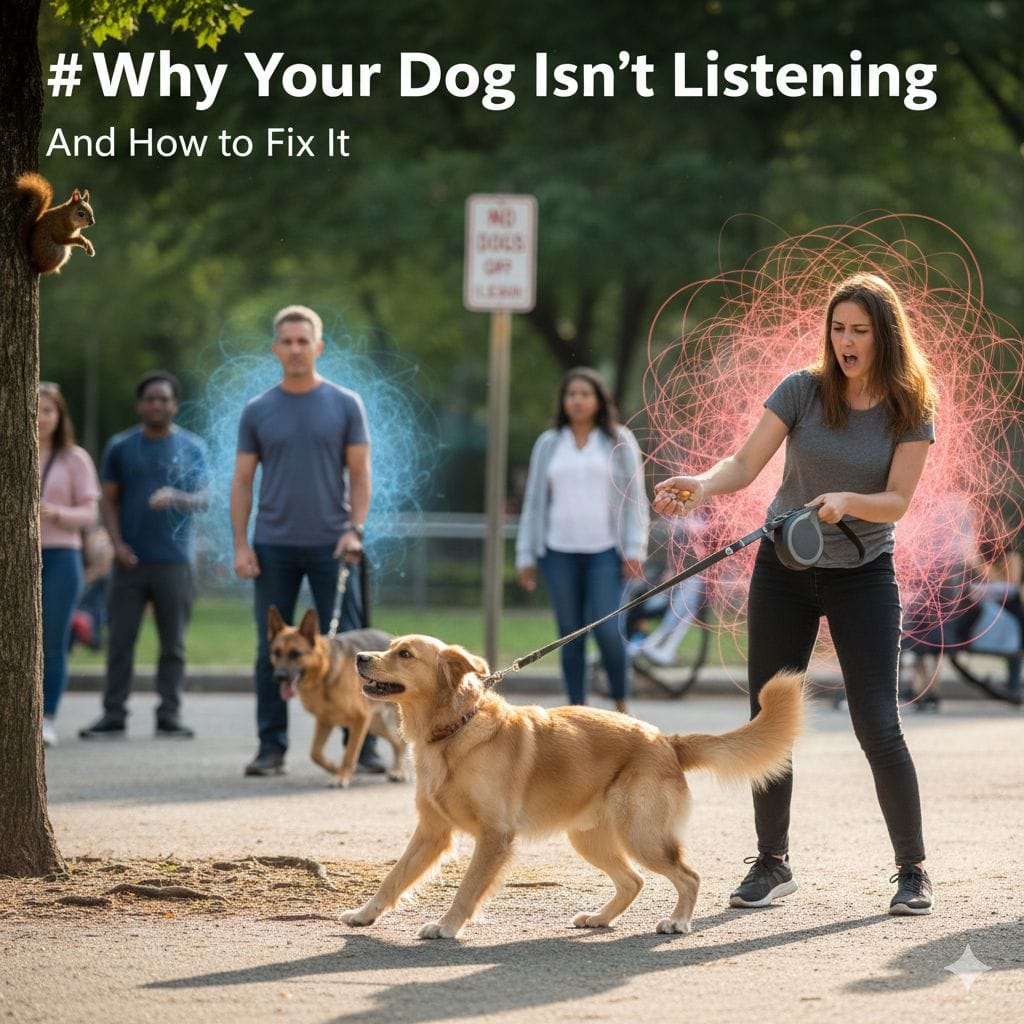
Predatory behaviors. If your dog chases squirrels, cats, or bikes, a treat in your hand simply can’t compete with that hardwired instinct in the moment. You need impulse control training, managed exposure, and sometimes professional intervention.
Attention-seeking behaviors. When your dog barks for attention or jumps for interaction, giving them treats (even to reward stopping) still gives them what they want: your attention. You’re feeding the cycle.
So What Actually Works?
The solution isn’t to abandon treats—they’re valuable tools. The solution is to understand their proper role in a complete training program.
Start with management. Before you can train new behaviors, you need to prevent the old ones from being rehearsed. Use leashes, baby gates, crates, and environmental controls to stop your dog from practicing unwanted behaviors while you work on teaching alternatives.
Mark and reward precisely. Use a marker word (“yes!”) or clicker to pinpoint the exact moment your dog does something right, then deliver the treat. This creates clarity. Your dog learns what specific action earned the reward, not just that you’re a random treat dispenser.
Fade the food gradually. Once your dog understands a behavior, start rewarding intermittently. Sometimes a treat, sometimes praise, sometimes a toy. Variable reinforcement actually creates stronger behaviors than constant rewards.
Build impulse control separately. Practice “wait” at doors, “leave it” with food on the floor, and “settle” on a mat. These exercises teach your dog that self-control itself is rewarding and expected.
Address the emotional state. For fear, anxiety, or overexcitement, you need techniques like desensitization, counterconditioning, and threshold management. These approaches change how your dog feels about triggers, not just how they act in the moment.
Set boundaries. Sometimes dogs need to learn what not to do. This doesn’t mean harsh corrections, but it does mean clear, consistent communication that certain behaviors don’t work. Ignoring jumping, turning away from demand barking, and removing access to fun when rules are broken all teach important lessons.
The Real Training Equation
Think of dog training like teaching a child to read. You wouldn’t just hand them candy every time they look at a book and expect them to become literate. You’d need systematic instruction, practice, patience, and yes, some rewards along the way—but the rewards support the learning, they don’t replace it.
The same applies to your dog. Treats are the salary, not the job description. They motivate your dog to engage with you and make training enjoyable, but the actual teaching comes from clear communication, consistent practice, and a training plan that addresses the root cause of behavior problems.
Most behavior issues stem from lack of structure, unclear communication, unmet needs (mental stimulation, exercise, socialization), or emotional dysregulation. No amount of treats will fix these foundational problems. You need to actually train—and that means more than just dispensing food.
Moving Forward
If you’ve been relying heavily on treats without seeing results, it’s time to step back and assess:
- Are you addressing the root cause of the behavior or just trying to bribe your way around it?
- Does your dog understand what you’re asking, or are they just following the food?
- Have you taught impulse control and boundaries, or only specific tricks?
- Are you consistent enough that your dog can actually learn patterns?
The dogs who are calmest, most obedient, and best behaved aren’t the ones who’ve been given the most treats. They’re the ones who’ve received the clearest training, most consistent boundaries, and deepest understanding from their owners.
Food is a powerful tool in your training toolbox. But it’s just that—a tool, not the entire solution. Real training requires thought, consistency, proper technique, and addressing your dog’s actual needs.
Stop bribing. Start training. Your dog will thank you for the clarity.