Creamy Keto Coffee Cheesecake – Sugar-Free & Rich in Flavor
Prep Time: 20 minutes
Cook Time: 50 minutes
Cooling Time: 4 hours
Total Time: 5 hours 10 minutes
Servings: 12 slices
Difficulty: Medium
Diet: Keto, Low-Carb, Gluten-Free, Vegetarian
Description
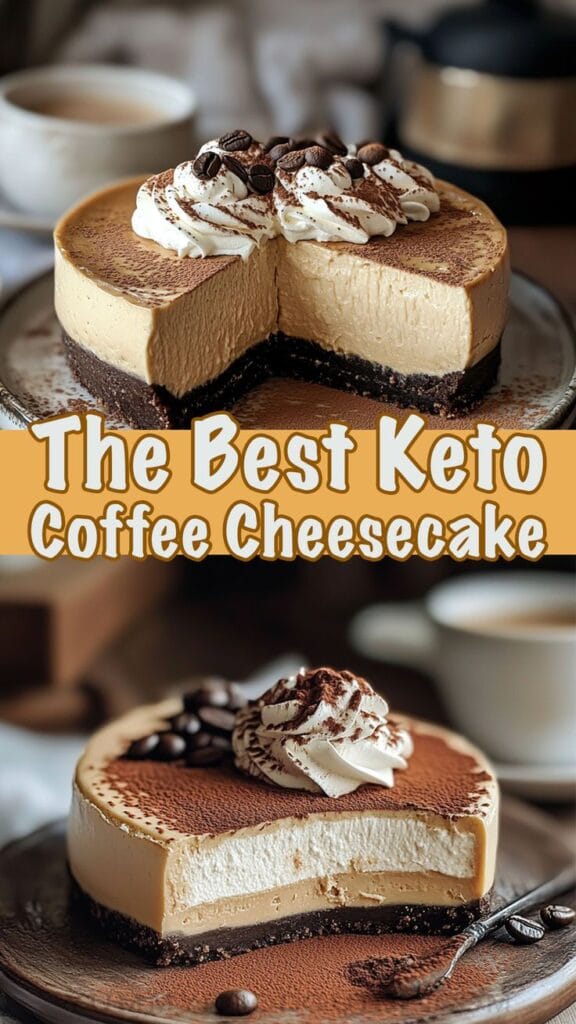
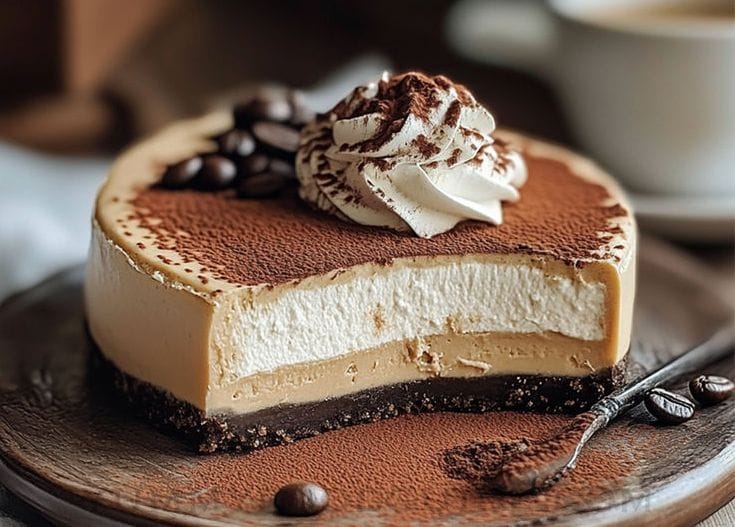
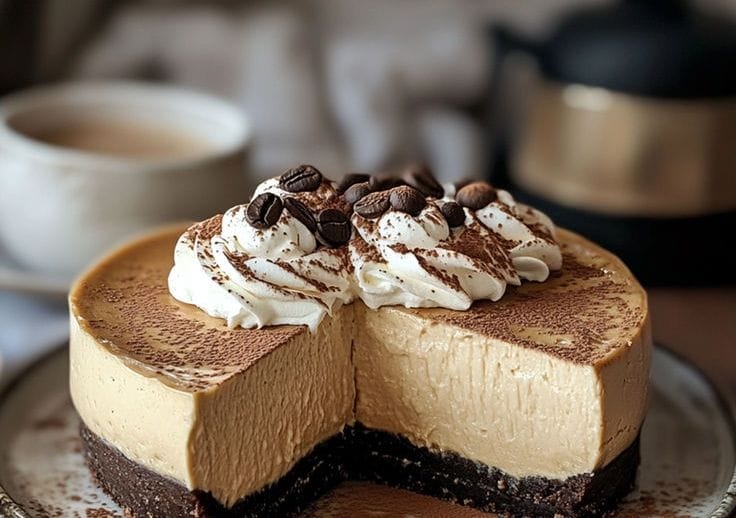
Calling all coffee lovers! This rich and creamy Keto Coffee Cheesecake is sugar-free, low-carb, and packed with bold espresso flavor. A decadent dessert without the guilt! This showstopping cheesecake features a silky-smooth filling infused with robust coffee, sitting atop a buttery almond flour crust. It’s the perfect marriage of your two favorite indulgences—coffee and cheesecake—in one incredible keto-friendly dessert that tastes like it came from an upscale bakery.
Why This Keto Coffee Cheesecake Is Special
Cheesecake is already one of the most naturally keto-friendly desserts out there, but when you add the sophisticated depth of espresso, something magical happens. This isn’t just a dessert—it’s an experience. The bold coffee flavor elevates the tangy cream cheese, creating a complex taste profile that appeals to adult palates while remaining perfectly sweet and satisfying.
Restaurant-Quality at Home: This cheesecake rivals anything you’d find at a high-end coffee shop or bakery, but costs a fraction of the price and contains zero hidden sugars or carbs.
Perfect Macros: With only 4-5g net carbs per generous slice, this fits beautifully into most keto meal plans without requiring you to sacrifice other meals.
Impressively Easy: While it looks and tastes complicated, this cheesecake uses straightforward techniques that even beginner bakers can master.
Make-Ahead Friendly: Actually tastes better the next day, making it perfect for entertaining or meal prep desserts.
No Water Bath Required: Unlike traditional cheesecakes, this recipe achieves perfect texture without the fuss of a water bath.
Ingredients
For the Almond Flour Crust:
- 2 cups almond flour (finely ground)
- ⅓ cup powdered erythritol or monk fruit sweetener
- 6 tablespoons butter, melted
- 1 teaspoon vanilla extract
- Pinch of sea salt
For the Coffee Cheesecake Filling:
- 24 oz cream cheese (three 8-oz packages), softened to room temperature
- ¾ cup powdered erythritol or monk fruit sweetener
- 3 large eggs, room temperature
- ½ cup sour cream, room temperature
- 2 tablespoons instant espresso powder
- 2 tablespoons hot water
- 1 tablespoon vanilla extract
- ¼ teaspoon sea salt
For the Optional Coffee Whipped Cream Topping:
- 1 cup heavy whipping cream, cold
- 2 tablespoons powdered erythritol
- 1 teaspoon instant espresso powder
- ½ teaspoon vanilla extract
Optional Garnishes:
- Sugar-free chocolate shavings
- Cocoa powder for dusting
- Whole coffee beans
- Sugar-free caramel sauce
Equipment Needed
- 9-inch springform pan
- Parchment paper
- Large mixing bowls
- Hand mixer or stand mixer
- Rubber spatula
- Small bowl for dissolving espresso
- Measuring cups and spoons
- Aluminum foil (for wrapping pan bottom)
- Cooling rack
Instructions
Step 1: Prepare Your Pan
Preheat your oven to 325°F (165°C). Line the bottom of a 9-inch springform pan with parchment paper. Wrap the outside bottom and sides of the pan tightly with aluminum foil. This prevents any butter from leaking during baking and makes cleanup easier.
Step 2: Make the Crust
In a medium bowl, combine the almond flour, ⅓ cup powdered sweetener, melted butter, vanilla extract, and a pinch of salt. Mix with a fork until the mixture resembles wet sand and holds together when pressed.
Press the mixture firmly and evenly into the bottom of your prepared springform pan. Use the bottom of a measuring cup or glass to pack it down tightly, creating a compact, even layer. Extend the crust slightly up the sides (about ½ inch) if desired.
Step 3: Pre-Bake the Crust
Bake the crust for 10-12 minutes until it’s lightly golden and fragrant. Remove from the oven and let it cool while you prepare the filling. Keep the oven at 325°F.
Step 4: Dissolve the Espresso
In a small bowl, combine the instant espresso powder with 2 tablespoons of hot water. Stir until completely dissolved. This intensifies the coffee flavor and ensures no grainy texture in your cheesecake. Set aside to cool slightly.
Step 5: Beat the Cream Cheese
In a large mixing bowl, beat the softened cream cheese with a hand mixer or stand mixer on medium speed for 2-3 minutes until it’s completely smooth, fluffy, and lump-free. Scrape down the sides of the bowl as needed.
The cream cheese must be at room temperature—this is crucial for a smooth, lump-free filling. Cold cream cheese will create lumps no matter how long you mix.
Step 6: Add Sweetener
Add the ¾ cup powdered sweetener to the cream cheese and beat for another 1-2 minutes until fully incorporated and fluffy.
Step 7: Add Eggs One at a Time
Reduce mixer speed to low. Add the eggs one at a time, mixing just until each egg is incorporated before adding the next. Don’t overmix after adding eggs—this can incorporate too much air and cause cracks. Mix just until you can’t see streaks of egg.
Step 8: Add Remaining Filling Ingredients
Add the sour cream, dissolved espresso mixture, vanilla extract, and salt. Mix on low speed just until everything is combined and smooth—about 30 seconds. Scrape down the sides and bottom of the bowl with a rubber spatula to ensure everything is incorporated.
The filling should be smooth, silky, and pourable with a beautiful coffee color.
Step 9: Pour Filling into Crust
Pour the cheesecake filling over the pre-baked crust. Gently tap the pan on the counter a few times to release any air bubbles. Use a spatula to smooth the top if needed.
Step 10: Bake
Place the springform pan on a baking sheet (for easier handling and to catch any potential leaks). Bake at 325°F for 50-60 minutes.
The cheesecake is done when the edges are set and slightly puffed, but the center still jiggles slightly when you gently shake the pan. It should look like soft-set jello in the very center—about a 2-3 inch circle. This jiggle will set as it cools.
Important: Don’t overbake! The cheesecake continues cooking as it cools. If the entire surface looks completely set, it’s overbaked and may crack or have a dry texture.
Step 11: Cool Gradually
Turn off the oven and crack the oven door open about 2 inches. Let the cheesecake sit in the warm oven for 1 hour. This gradual cooling helps prevent cracks.
After 1 hour, remove the cheesecake from the oven and let it cool to room temperature on a cooling rack—about 1-2 hours.
Step 12: Refrigerate
Once at room temperature, cover the cheesecake (still in the springform pan) with plastic wrap and refrigerate for at least 4 hours, or preferably overnight. Cheesecake actually tastes better the next day as the flavors meld and the texture becomes perfectly creamy.
Step 13: Make the Coffee Whipped Cream (Optional)
In a cold bowl, combine the heavy whipping cream, powdered sweetener, espresso powder, and vanilla extract. Beat with a hand mixer on high speed until stiff peaks form—about 2-3 minutes. Be careful not to overbeat or you’ll make butter.
Step 14: Remove from Pan and Serve
Run a thin knife around the edge of the cheesecake to loosen it from the pan. Release and remove the springform pan sides.
Transfer the cheesecake (still on the pan bottom or carefully moved to a serving plate) to your serving dish. Top with coffee whipped cream, chocolate shavings, a dusting of cocoa powder, or leave it beautifully plain.
Step 15: Slice and Enjoy
Use a sharp knife, wiping it clean between each cut, to slice into 12 perfect portions. Serve chilled and enjoy the creamy, coffee-infused decadence!
Recipe Notes
Room Temperature Ingredients: This is non-negotiable. Room temperature cream cheese, eggs, and sour cream blend smoothly without lumps. Take everything out of the fridge 1-2 hours before baking.
Instant Espresso vs. Coffee: Instant espresso powder has a more concentrated, robust flavor than regular instant coffee. If using instant coffee, you may want to increase the amount to 3 tablespoons for bolder flavor.
Sweetener Choice: Powdered sweeteners dissolve better than granulated. Erythritol-based sweeteners work best for cheesecake as they don’t have the strong aftertaste that some other keto sweeteners can have. You can make your own powdered sweetener by blending granulated erythritol in a high-speed blender.
Preventing Cracks: The gradual cooling method (turning off oven and cracking the door) is the best way to prevent cracks. Sudden temperature changes cause cracks. If your cheesecake does crack, simply cover with whipped cream!
Testing for Doneness: The internal temperature should reach 150°F in the center when done. If you don’t have a thermometer, use the “jiggle test”—the center should wobble like jello.
Almond Flour Quality: Use blanched, finely ground almond flour for the best texture. Almond meal (with skins) or coarsely ground almond flour will create a grainier crust.
Storage Instructions
Refrigerator: Store covered in the refrigerator for up to 7 days. The cheesecake actually improves after a day or two as the flavors develop.
Freezer: Wrap individual slices tightly in plastic wrap, then place in a freezer-safe container. Freeze for up to 3 months. Thaw overnight in the refrigerator before serving.
Serving Temperature: This cheesecake is best served chilled, straight from the refrigerator. The texture is perfectly creamy and the flavors are most pronounced when cold.
Make-Ahead: This is an excellent make-ahead dessert. Prepare it 1-2 days before you need it. The flavors improve and the texture becomes even more luxurious after sitting in the fridge.
Nutritional Information (Per Slice)
Based on 12 servings, without optional toppings
- Calories: 285
- Total Fat: 27g
- Saturated Fat: 12g
- Protein: 7g
- Total Carbohydrates: 7g
- Fiber: 2g
- Net Carbs: 5g
- Sugar: 2g (naturally occurring)
- Sugar Alcohols: 12g (from erythritol, not absorbed)
- Sodium: 220mg
Macro Breakdown:
- Fat: 85%
- Protein: 10%
- Net Carbs: 5%
The Science of Perfect Keto Cheesecake
Why Temperature Matters
Cheesecake is essentially a custard, and like all custards, it’s sensitive to temperature. Room temperature ingredients blend more easily, creating a smoother texture without overmixing. Overmixing incorporates too much air, which can cause the cheesecake to puff up in the oven and then collapse and crack as it cools.
The Role of Sour Cream
Sour cream serves multiple purposes in cheesecake:
- Tanginess: Balances the richness of the cream cheese
- Moisture: Keeps the texture creamy rather than dense
- Tenderness: The acidity tenderizes the protein structure
- Stability: Helps prevent cracking
Why We Don’t Overbake
Cheesecake continues to set as it cools due to carryover cooking. If you bake it until the center is completely firm, it will be overbaked by the time it cools, resulting in a dry, dense texture and likely cracks. The slight jiggle in the center is your friend!
Coffee’s Flavor Enhancement
Coffee doesn’t just add coffee flavor—it actually enhances other flavors, particularly chocolate and vanilla. This is why espresso powder is often added to chocolate recipes. In this cheesecake, the coffee deepens all the flavors, making the cream cheese taste richer and the sweetness more complex.
Variations and Flavor Twists
Mocha Coffee Cheesecake
Add ¼ cup unsweetened cocoa powder to the filling along with the espresso for a chocolate-coffee combination. You can also swirl sugar-free chocolate sauce on top before baking.
Irish Cream Coffee Cheesecake
Replace the vanilla extract with Irish cream extract or add 2 tablespoons of sugar-free Irish cream syrup to the filling.
Tiramisu Cheesecake
Brush the crust with additional coffee before adding the filling, and dust the top heavily with cocoa powder. Add a layer of mascarpone whipped cream on top.
Caramel Macchiato Cheesecake
Swirl sugar-free caramel sauce through the filling before baking. Top with caramel whipped cream and more caramel drizzle.
Hazelnut Coffee Cheesecake
Replace ½ cup of almond flour in the crust with hazelnut flour. Add 1 teaspoon hazelnut extract to the filling.
Cinnamon Coffee Cheesecake
Add 1½ teaspoons ground cinnamon to the filling for a coffee cake-inspired version.
Peppermint Mocha Cheesecake
Add cocoa powder to the filling plus ½ teaspoon peppermint extract. Top with sugar-free chocolate shavings.
Salted Caramel Espresso Cheesecake
Add a pinch of extra sea salt to the filling and drizzle with sugar-free salted caramel sauce before serving.
Troubleshooting Common Cheesecake Issues
Cracks on the Surface:
- Cause: Overbaking, rapid cooling, or too much air incorporated
- Prevention: Don’t overbake (center should jiggle), cool gradually in the oven, don’t overmix after adding eggs
- Fix: Cover with whipped cream, chocolate ganache, or dust with cocoa powder
Sunken Center:
- Cause: Underbaking or opening the oven door too early
- Prevention: Bake until edges are set but center jiggles, don’t open oven during baking
- Fix: Fill the depression with whipped cream
Grainy Texture:
- Cause: Cold ingredients that didn’t blend smoothly, or overbaking
- Prevention: Use room temperature ingredients, don’t overbake
- Fix: Unfortunately, this can’t be fixed after baking
Lumpy Filling:
- Cause: Cold cream cheese
- Prevention: Make absolutely sure cream cheese is at room temperature before starting
- Fix: Beat longer on low speed, or strain the filling before pouring into crust (tedious but effective)
Cheesecake Stuck to Pan:
- Cause: Not lining with parchment paper or not running a knife around edges
- Prevention: Always line the bottom with parchment, run a thin knife around edges before releasing springform
- Fix: Use a thin spatula to carefully loosen
Soggy Crust:
- Cause: Not pre-baking the crust, or too much butter in the crust mixture
- Prevention: Always pre-bake the crust until lightly golden
- Fix: Can’t be fixed after the fact, but the cheesecake will still taste delicious
Too Dense/Heavy:
- Cause: Overbaking or overmixing
- Prevention: Mix just until combined after adding eggs, don’t overbake
- Fix: Serve with whipped cream to lighten the texture
Espresso Flavor Too Weak:
- Cause: Not enough espresso powder or using instant coffee instead
- Prevention: Use instant espresso powder and don’t be shy with the amount
- Fix: Serve with coffee whipped cream or brush the top with additional dissolved espresso
Tips for Cheesecake Success
Pre-Baking is Essential
Don’t skip pre-baking the crust. This step ensures a crispy, firm base that won’t become soggy when you add the wet filling.
The Toothpick Test Doesn’t Work
Unlike regular cakes, you can’t test cheesecake doneness with a toothpick. The jiggle test or a thermometer are your only reliable methods.
Plan Ahead
Cheesecake needs time—both for baking and cooling. You can’t rush this dessert. The good news is that it’s completely make-ahead friendly and tastes better the next day.
Sharp Knife, Clean Cuts
For picture-perfect slices, use a sharp knife dipped in hot water and wiped clean between each cut. This prevents the creamy filling from dragging and creates clean edges.
Springform Pan is Non-Negotiable
You really need a springform pan for cheesecake. The removable sides allow you to unmold the delicate cheesecake without breaking it.
Quality Ingredients Matter
Since this recipe has so few ingredients, quality really shows. Use good cream cheese (full-fat Philadelphia is the gold standard), real butter, and fresh eggs.
Perfect Pairings
Coffee Companions
Serve with a hot cup of black coffee or espresso to double down on the coffee flavor. The contrast between hot coffee and cold cheesecake is delightful.
Complementary Desserts
This cheesecake pairs beautifully with:
- Sugar-free chocolate truffles
- Keto biscotti for dipping in coffee
- Fresh berries (raspberries especially)
- Sugar-free chocolate sauce
Wine Pairing
For a sophisticated dessert course, pair with:
- Dry red wine (Cabernet Sauvignon)
- Port-style dessert wine
- Irish cream liqueur
- Brandy or cognac
Serving Suggestions
Simple Elegance
Sometimes the best presentation is the simplest. A clean slice of cheesecake on a white plate with a dusting of cocoa powder is stunning.
Coffee Shop Style
Top with coffee whipped cream, drizzle with sugar-free caramel or chocolate sauce, and garnish with chocolate-covered espresso beans.
Deconstructed Style
Crumble the crust, pipe rosettes of the filling, add whipped cream, and garnish with chocolate shavings for a modern plated dessert.
Individual Portions
Make this recipe in a muffin tin for individual mini cheesecakes—perfect for portion control and parties.
Why This Recipe Works for Keto
Traditional cheesecake is already relatively low-carb since it’s primarily cream cheese and eggs. The main carb culprits in regular cheesecake are the graham cracker crust and the sugar. By swapping these for almond flour and keto-friendly sweeteners, we create a dessert that’s virtually identical to the original but with a fraction of the carbs.
Almond Flour vs. Graham Crackers
- Traditional crust: ~15g net carbs per slice
- Almond flour crust: ~2g net carbs per slice
Sugar vs. Erythritol
- Traditional: ~25g sugar per slice
- Keto version: 0g sugar, 0g net carbs from sweetener
The Result
A dessert that delivers the same creamy, rich, satisfying experience as traditional cheesecake but fits perfectly into a ketogenic lifestyle.
Frequently Asked Questions
Can I make this without a springform pan?
It’s difficult but possible. You can use a regular cake pan lined with parchment paper with long overhangs that you can use as handles to lift the cheesecake out. It won’t be as neat, but it will work.
Can I use decaf espresso powder?
Absolutely! The flavor is what matters, not the caffeine content.
My sweetener has a cooling effect. Is that normal?
Yes, erythritol-based sweeteners can have a slight cooling sensation on the tongue. This dissipates somewhat as the cheesecake sits. Mixing erythritol with monk fruit can reduce this effect.
Can I make this dairy-free?
It’s challenging since cream cheese is the main ingredient. You can try dairy-free cream cheese alternatives, but the texture and flavor will be different, and I can’t guarantee results.
Do I really need to wait 4 hours?
Yes, for best texture. The cheesecake needs time to fully set in the refrigerator. You can eat it sooner, but it will be softer and may not slice as cleanly.
Can I use regular coffee instead of espresso powder?
Yes, but use strongly brewed coffee and reduce the liquid in the recipe accordingly. Espresso powder is more concentrated and easier to work with.
Will this spike my blood sugar?
Erythritol has a glycemic index of zero and doesn’t typically affect blood sugar. However, individual responses vary, especially with larger portions.
Can I halve this recipe?
Yes, but use a 6-inch springform pan and reduce baking time by about 10-15 minutes.
Why is my cheesecake grainy?
Either your cream cheese wasn’t at room temperature, or your sweetener didn’t fully dissolve. Always use powdered sweetener, not granulated.
Can I add alcohol?
Yes! A tablespoon or two of Kahlua, Irish cream, or coffee liqueur would be delicious. Keep in mind this adds some carbs and sugar.
Making This Cheesecake Extra Special
For Special Occasions
Transform this into a showstopper by piping decorative whipped cream rosettes around the edge, adding chocolate shavings, and placing fresh berries or chocolate-covered coffee beans in the center.
For Coffee Fanatics
Double down on coffee by serving with a shot of espresso poured over the top (affogato-style) just before eating.
For Gifting
Individual mini cheesecakes made in a muffin tin make wonderful gifts. Package them in clear boxes with ribbon for beautiful presentation.
Final Thoughts
This Keto Coffee Cheesecake represents the very best of low-carb baking—a dessert so rich, creamy, and flavorful that no one would ever guess it’s sugar-free or keto-friendly. It’s proof that choosing a ketogenic lifestyle doesn’t mean sacrificing the desserts you love; it simply means making smarter versions that support your health goals.
The combination of tangy cream cheese and bold espresso creates a sophisticated flavor profile that appeals to adult palates while remaining sweet enough to satisfy any dessert craving. Whether you’re serving this to keto dieters or traditional dessert lovers, everyone will be impressed.
The beauty of cheesecake is that while it requires patience (mostly for cooling and setting), the actual hands-on time is minimal, and the technique is straightforward. Once you’ve mastered this recipe, you’ll find yourself making it again and again—for birthdays, holidays, dinner parties, or simply because Tuesday afternoon called for something special.
So brew yourself a strong cup of coffee, preheat that oven, and get ready to create a dessert that’s worthy of any upscale bakery—right in your own kitchen. Your taste buds (and your macros) will thank you.
Ready to impress yourself and everyone you know? Pin this recipe and make coffee-infused magic happen! ☕🍰