
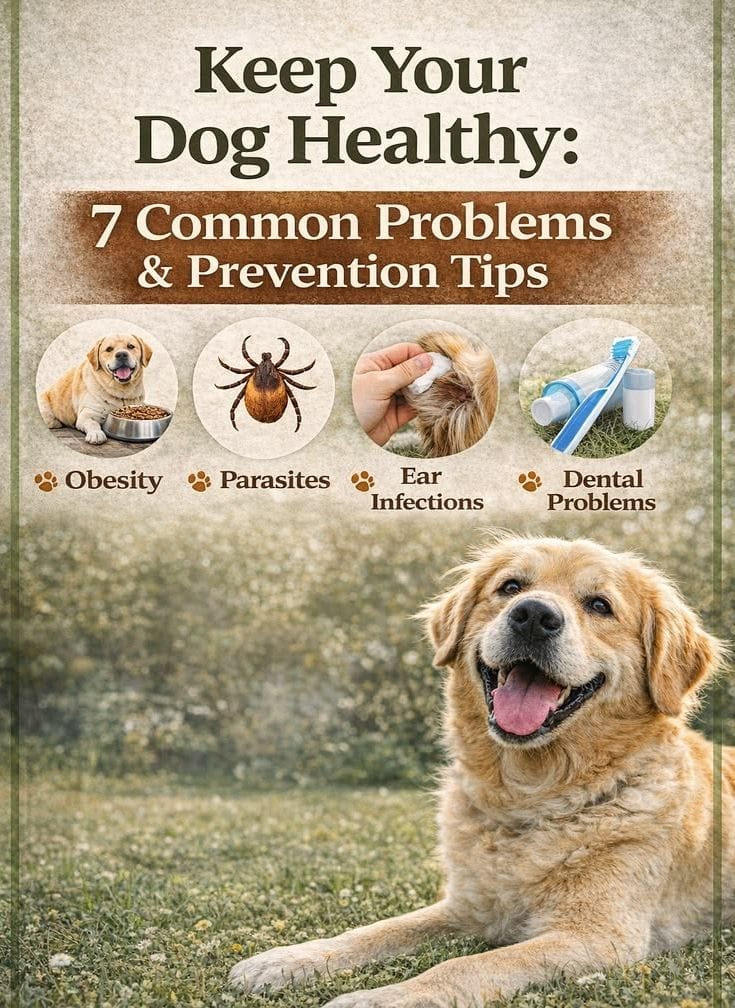
Common Dog Health Problems & How to Prevent Them
Dental disease is the single most common health condition diagnosed in adult dogs, affecting an estimated 80% of dogs over age 3. Despite being so prevalent, it’s also one of the most overlooked by pet owners.
What Is Canine Periodontal Disease?
Periodontal disease begins with plaque — a sticky film of bacteria — building up on teeth. Over time, plaque hardens into tartar, which irritates the gums and leads to gingivitis (gum inflammation). If left untreated, the infection can spread below the gumline, destroying the bone and soft tissue that hold teeth in place.
More alarmingly, the bacteria from dental infections can enter the bloodstream and damage the heart, kidneys, and liver.
Warning Signs of Dental Disease
- Bad breath (the most common early sign)
- Yellow or brown tartar buildup on teeth
- Red, swollen, or bleeding gums
- Drooling more than usual
- Difficulty eating or dropping food
- Pawing at the mouth or face
- Loose or missing teeth
How to Prevent Dental Disease in Dogs
- Brush your dog’s teeth daily – This is the gold standard of dental care. Use a dog-specific toothpaste (never human toothpaste, which contains toxic xylitol). Even brushing 3–4 times per week makes a significant difference.
- Dental chews and toys – Enzymatic dental chews (look for the VOHC seal of approval) help reduce plaque buildup.
- Dental diets – Some prescription diets are formulated to mechanically scrub teeth as the dog chews.
- Water additives – Dental water additives can help reduce oral bacteria.
- Professional cleanings – Annual veterinary dental cleanings under anesthesia allow for thorough scaling, polishing, and X-rays to catch hidden problems early.