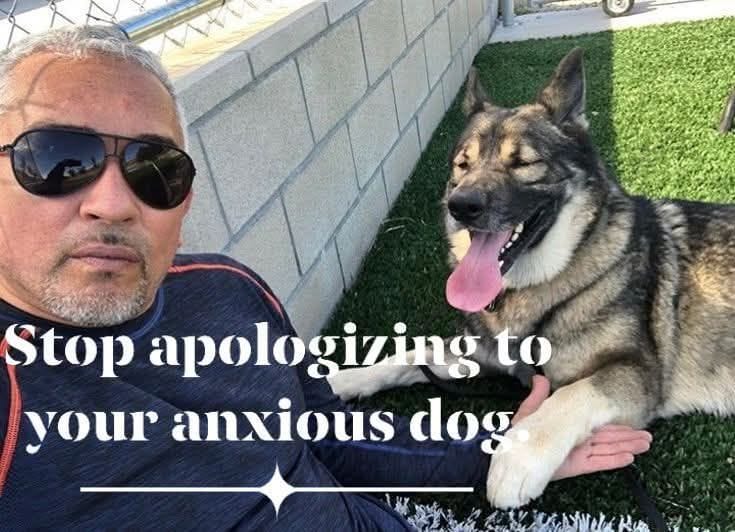
Cesar Millan Explains the Difference Between Discipline and Abuse
The debate around punishment in dog training is one of the most polarizing topics in the dog world. On one side, you have trainers who say punishment is never necessary. On the other, trainers who swear it’s essential for effective training.

Then there’s Cesar Millan—arguably the most famous dog behaviorist in the world—caught in the middle of this controversy for decades.
His approach has been called everything from “life-changing” to “abusive.” But what does Cesar actually say about punishment? What’s the difference between discipline and abuse? And does punishment really work in dog training?
Let’s break down what the science says, what Cesar teaches, and what actually works in the real world.
What Is Punishment in Dog Training?
First, let’s get clear on terms. In behavior science, “punishment” doesn’t mean what most people think it means.
Punishment (in behavioral terms) is anything that decreases the likelihood of a behavior happening again. That’s it. It’s not inherently cruel or kind—it’s just a consequence that makes a behavior less likely to repeat.
Punishment comes in two forms:
Positive punishment: Adding something unpleasant to stop a behavior
- Examples: leash corrections, verbal reprimands, spray bottles, shock collars
Negative punishment: Removing something pleasant to stop a behavior
- Examples: turning away from a jumping dog, ending playtime for rough play, removing attention for barking
Both are “punishment” in the technical sense because they decrease behavior. But they’re wildly different in application and ethics.
What Cesar Millan Actually Says About Discipline
Cesar gets accused of advocating “dominance” and “punishment-based training,” but if you actually listen to what he says, his philosophy is more nuanced.
Cesar distinguishes between three concepts:
1. Discipline
Discipline, in Cesar’s framework, is about setting boundaries and establishing rules with calm, consistent leadership. It’s not about pain or fear—it’s about structure.
According to Cesar, dogs need:
- Clear rules that are enforced consistently
- A calm, assertive leader who provides direction
- Consequences for unwanted behavior (but not abusive consequences)
- Balance between exercise, discipline, and affection (in that order)
Discipline means your dog doesn’t get what they want (access to the door, your attention, forward movement on the leash) when they’re behaving inappropriately. That’s negative punishment in behavioral terms, and it’s incredibly effective.
2. Correction
A correction, in Cesar’s terminology, is a brief interruption of unwanted behavior—usually a quick touch, sound, or leash pop—designed to snap the dog out of an undesirable mental state.
Cesar’s corrections are meant to be:
- Brief and immediate (not prolonged)
- Proportional to the behavior and the dog
- Emotionally neutral (not angry or aggressive)
- Followed by redirection to appropriate behavior
The goal isn’t to hurt the dog. It’s to interrupt a behavior pattern and redirect their focus back to you.
3. Abuse
Abuse is something entirely different. Abuse involves:
- Pain or fear used excessively or inappropriately
- Emotional or physical harm
- Corrections given in anger or frustration
- Using force beyond what’s necessary to communicate
- No teaching component—just punishment without guidance
Cesar has been very clear: this is not what he advocates. In fact, he’s repeatedly stated that his approach requires calmness and emotional control—if you’re angry, frustrated, or aggressive, you shouldn’t be correcting your dog.
The Science of Punishment in Dog Training
So does punishment work? According to behavioral science: yes, it can work to stop behavior. But it comes with risks.
What the Research Shows
Punishment can effectively suppress behavior—at least in the short term. Studies show that aversive methods (shock collars, leash corrections, physical corrections) can reduce unwanted behaviors quickly.
However, punishment also carries significant risks:
- Increased aggression: Multiple studies have found that dogs trained with aversive methods show higher rates of aggression toward people and other dogs.
- Learned helplessness: Over-reliance on punishment can create dogs who shut down, stop trying, and become passive or anxious.
- Damaged relationship: Punishment can erode trust between dog and handler, especially if the dog doesn’t understand why they’re being punished.
- Fallout behaviors: Suppressing one behavior through punishment often causes anxiety-related behaviors to pop up elsewhere (displacement behaviors, stress signals).
- Timing problems: Punishment only works if applied within 1-2 seconds of the unwanted behavior. Humans are notoriously bad at this timing, which means we often punish the wrong thing.
- Doesn’t teach replacement behavior: Punishment tells a dog what NOT to do, but doesn’t teach them what TO do instead.
What Works Better
Modern behavioral science overwhelmingly supports positive reinforcement as the most effective, humane approach:
- Reward behaviors you want
- Ignore or redirect behaviors you don’t want
- Set up the environment for success
- Use negative punishment (removing rewards) for unwanted behavior
This approach:
- Builds confidence and enthusiasm
- Strengthens the human-dog bond
- Creates dogs who think and problem-solve
- Has no negative side effects
- Works long-term, not just short-term
The American Veterinary Society of Animal Behavior, the Association of Professional Dog Trainers, and virtually every major animal welfare organization recommend positive reinforcement-based training over punishment-based methods.
So Why Does Cesar Still Use Corrections?
Here’s where things get interesting. Cesar works primarily with severe behavior cases—dogs who are extremely aggressive, have bitten people, or are about to be euthanized because they’re “unfixable.”
In these high-stakes situations, Cesar argues that:
- Time is limited: Owners of aggressive dogs often don’t have months to slowly reshape behavior. The dog might be euthanized, surrendered, or cause serious injury before slow positive reinforcement takes effect.
- Safety is paramount: When working with genuinely dangerous dogs, immediate interruption of aggressive behavior can prevent injury.
- Some dogs need clear boundaries: Cesar believes certain dogs—particularly those with no prior structure—benefit from immediate, clear feedback about unacceptable behavior.
- Corrections are one tool in a larger toolbox: Cesar doesn’t only use corrections. He emphasizes exercise, calm energy, redirection, and yes, positive reinforcement too.
Whether you agree with this reasoning or not, it’s important to understand that Cesar isn’t training pet dogs to sit and stay. He’s rehabilitating dogs with serious behavioral problems that other trainers have often failed to resolve.
The Real Debate: Not Whether, But When and How
The question isn’t really “does punishment work?” We know it can suppress behavior. The question is:
Should punishment be your primary training method?
The answer, according to most modern trainers and behaviorists, is no.
Should punishment ever be used?
This is where things get murkier, and honest trainers will tell you: it depends.
When Punishment Might Be Appropriate
Most positive reinforcement trainers acknowledge there are times when some form of punishment makes sense:
- Safety-critical moments: A dog running toward traffic might need a sharp “no” or leash correction to prevent injury.
- Interrupting genuinely dangerous behavior: If a dog is actively attacking another dog or person, immediate interruption is necessary.
- When positive reinforcement has failed: If a dog has been extensively trained with positive methods and still engages in dangerous behavior, some trainers will incorporate mild aversives as a last resort.
Even in these cases, punishment should be:
- Minimal and proportional
- Immediately followed by redirection to appropriate behavior
- Part of a comprehensive training plan that’s primarily positive
- Applied by someone who understands behavioral science and timing
When Punishment Is Never Appropriate
- For normal puppy behaviors: Puppies chew, have accidents, jump, and mouth. This is normal development, not disobedience. Punishment is inappropriate and ineffective.
- For fear-based behaviors: Punishing a fearful dog makes them more fearful. Period.
- For behaviors caused by medical issues: A dog who’s suddenly house-soiling due to a UTI doesn’t need punishment—they need a vet.
- When applied in anger: If you’re frustrated, angry, or emotional, you have no business correcting your dog.
- As the primary training method: If punishment is your default response to unwanted behavior, you’re doing it wrong.
What Actually Works: A Balanced Approach
Here’s what most successful dog trainers—regardless of their theoretical camp—actually do in practice:
1. Set Your Dog Up for Success
Management prevents problems before they start:
- Baby gates to prevent access to areas where problems occur
- Crates or pens for unsupervised time
- Leashes in situations where your dog might make poor choices
- Adequate exercise and mental stimulation
Prevention is more effective than any training method.
2. Reward Heavily for Desired Behaviors
Catch your dog doing things right and reward generously. This builds the behaviors you want while creating a dog who’s motivated to work with you.
Use high-value rewards: treats, toys, play, praise, access to things your dog wants.
3. Use Negative Punishment for Unwanted Behaviors
When your dog does something you don’t want:
- Remove the reward they’re seeking
- Turn away from jumping
- Stop moving forward when they pull
- End play session for too-rough play
This teaches consequences without causing fear or pain.
4. Redirect to Appropriate Behaviors
Don’t just stop the unwanted behavior—show your dog what to do instead:
- Dog jumps? Ask for sit, then reward
- Dog pulls? Stop, wait for loose leash, then continue
- Dog barks for attention? Ignore until quiet, then engage
5. Use Minimal Aversives Only When Necessary
For truly dangerous behaviors or in safety-critical moments, a sharp “no,” leash interruption, or other mild aversive might be warranted.
But this should be:
- Rare (not your default response)
- Brief and well-timed
- Followed immediately by redirection and reward for appropriate behavior
- Applied without emotion
6. Build a Relationship Based on Trust
Your dog should see you as a source of good things, clear guidance, and security—not as someone to fear or avoid.
The strongest training results come from dogs who want to work with you because the relationship is positive and rewarding.
The Cesar Millan Controversy: What’s Really Going On?
Cesar has been criticized by many modern trainers and veterinary behaviorists. Some of it is fair. Some of it is not.
Fair criticisms:
- Some of his techniques (alpha rolls, flooding fearful dogs) are outdated and contraindicated by current behavioral science
- His explanations of dog behavior sometimes rely on debunked “dominance theory”
- Some of his corrections are harsher than necessary
- He sometimes misreads dog body language and pushes dogs over threshold
Unfair criticisms:
- That he “abuses” dogs (his methods, while sometimes outdated, don’t constitute abuse)
- That he has no successful results (he clearly does—many people swear by his approach)
- That he never uses positive reinforcement (he does, it’s just not what gets shown on TV)
The reality is more complex: Cesar is a charismatic, intuitive dog handler who helps many people, but whose methods haven’t evolved to match current behavioral science. He’s effective with many dogs, but his approach carries risks that modern, force-free methods don’t.
What Should You Do?
If you’re training your own dog, here’s my honest recommendation:
Start with positive reinforcement. Learn to reward behaviors you want, manage the environment to prevent problems, and use negative punishment (removing rewards) for behaviors you don’t want.
For 90% of dogs and 95% of behavior problems, this approach works beautifully without any risks.
If you’re struggling with serious behavioral issues—aggression, severe reactivity, resource guarding—hire a professional. Look for:
- Certified trainers (CPDT-KA, KPA CTP)
- Veterinary behaviorists (board-certified specialists)
- Trainers who use primarily positive reinforcement but are honest about when and how they might use corrections
Avoid trainers who:
- Lead with aversives (shock collars, prong collars, fear-based methods)
- Talk extensively about “dominance” and “pack leadership”
- Use punishment as their primary tool
- Can’t explain the behavioral science behind their methods
Remember: Your dog is a family member, not a problem to be dominated. Training should build your relationship, not damage it.
The Bottom Line
Does punishment work in dog training? Yes, it can suppress behavior.
Is it necessary? For most dogs and most situations, no.
Is there a difference between discipline and abuse? Absolutely. Discipline is about structure, boundaries, and consistent rules. Abuse is about fear and pain.
Cesar Millan’s distinction matters: thoughtful, calm boundary-setting is not the same as anger-driven punishment or excessive force.
But here’s the truth modern science has shown us: you can achieve better results, faster, with fewer risks, using primarily positive reinforcement methods.
You don’t have to dominate your dog to train them. You don’t have to use fear or pain to get good behavior.
You just have to be consistent, patient, and willing to reward the behaviors you want more than you punish the behaviors you don’t.
That’s not soft or permissive. That’s smart training.
And it works.