Calm-Assertive Energy: Cesar Millan’s Secret to Dog Training
You’re frustrated. Your dog jumped on a guest—again. They pulled on the leash—again. They barked at another dog—again.
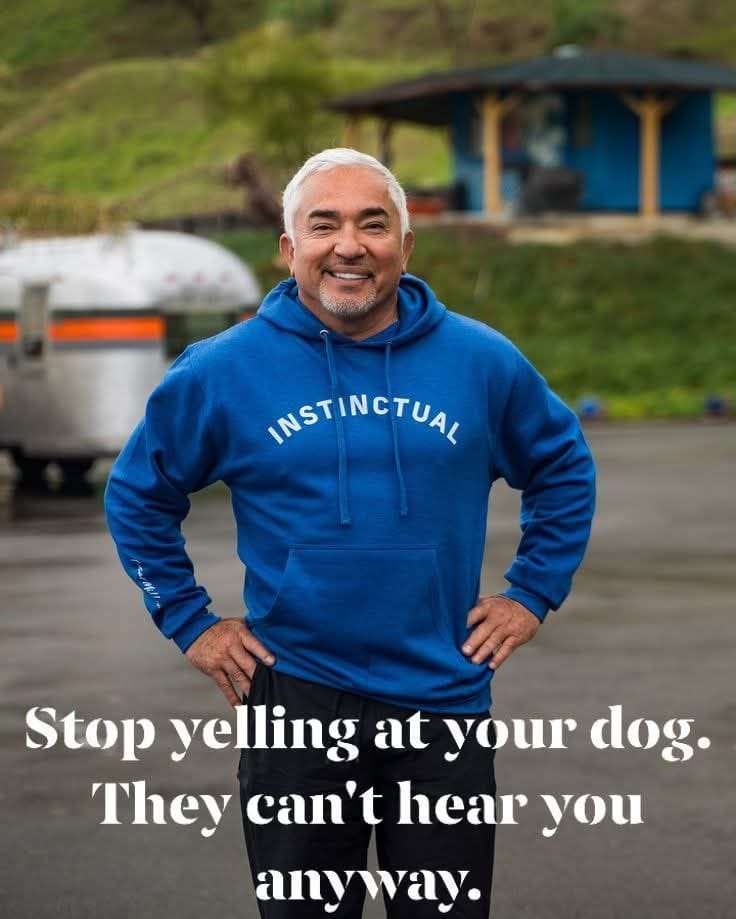
So you yell. You grab the leash. You physically push them off. You’re not trying to be mean—you’re just trying to communicate. You need them to stop.
But here’s what’s actually happening: your frustration is making everything worse.
Cesar Millan has said it thousands of times: “I rehabilitate dogs. I train people.” And the number one thing he teaches people? It’s not a technique or a trick. It’s an energy.
Calm-assertive energy is Cesar’s foundational principle for changing dog behavior—and most people completely misunderstand it.
Let’s break down what calm-assertive energy actually means, why it works, and how to use it to transform your dog’s behavior without yelling, hitting, or force.
What Is Calm-Assertive Energy?
Cesar describes four basic energy states humans typically project:
1. Calm-Assertive: Confident, relaxed, in control without being aggressive. This is leadership energy.
2. Calm-Passive: Relaxed but without direction or boundaries. This is permissive energy.
3. Excited-Assertive: Aggressive, angry, tense, confrontational. This is dominating energy.
4. Excited-Passive: Nervous, anxious, uncertain, emotional. This is fearful energy.
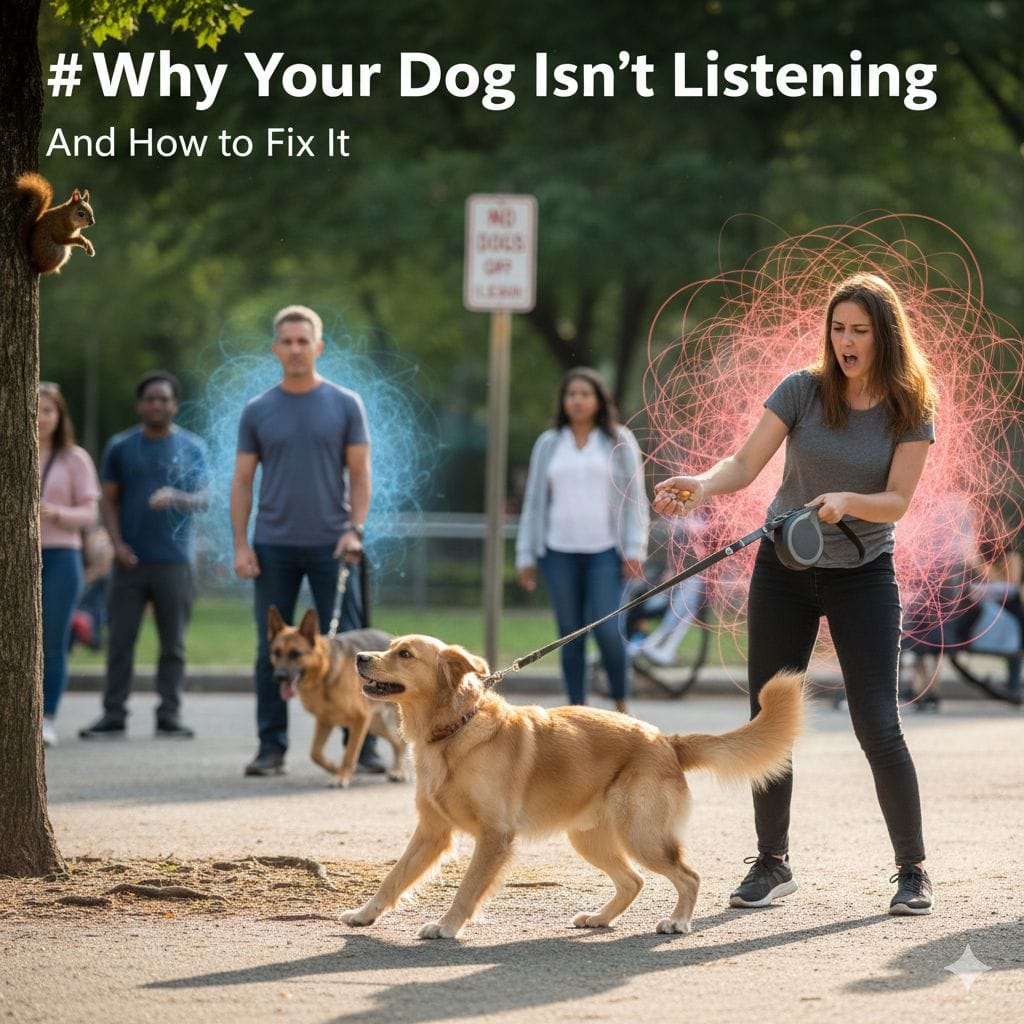
Most dog owners swing between excited-passive (anxious, uncertain) and excited-assertive (frustrated, yelling) without ever hitting calm-assertive.
And that’s the problem.
Calm-assertive energy is the sweet spot: you’re in control, you know what you want, you’re confident in your ability to handle the situation, but you’re not emotional, aggressive, or tense about it.
Think of it this way: a good parent doesn’t scream at their toddler for spilling juice. They calmly clean it up and set boundaries. That’s calm-assertive. They’re in charge, but they’re not losing their composure.
That’s exactly what your dog needs from you.
Why Energy Matters More Than Commands
Here’s what most people don’t understand: dogs read your energy before they hear your words.
Your dog isn’t responding to the word “sit.” They’re responding to your body language, tone, confidence level, and emotional state when you say “sit.”
You can say “sit” in a calm, confident voice—and your dog sits immediately.
You can say “sit” in a frustrated, pleading voice—and your dog ignores you.
Same word. Different energy. Different result.
Dogs are masters at reading body language and emotional states. They evolved alongside humans for thousands of years specifically to interpret our signals. They can detect subtle changes in your heart rate, posture, facial expressions, and pheromones.
When you’re anxious, your dog knows. When you’re angry, your dog knows. When you’re uncertain, your dog definitely knows.
And here’s the key: dogs don’t follow uncertain, anxious, or aggressive energy. They follow calm, confident energy.
The Problem With Excited-Assertive Energy (Yelling and Force)
When your dog misbehaves and you get frustrated, you’re moving into excited-assertive energy: tense, angry, aggressive.
You yell “NO!” You jerk the leash. You physically push or grab your dog. You’re trying to establish control, but you’re doing it from a place of emotion and frustration.
Here’s why this doesn’t work:
1. It creates fear, not respect
Your dog might stop the behavior temporarily because they’re scared of your reaction. But that’s not training—that’s intimidation. The behavior will return when you’re not around to enforce it.
2. It escalates the situation
Excited energy breeds excited energy. When you get tense and aggressive, your dog often mirrors that energy back—becoming more reactive, more aggressive, or more fearful.
3. It damages trust
Your dog should see you as a safe, predictable leader. When you react with anger and force, you become unpredictable. That erodes the foundation of your relationship.
4. It doesn’t teach
Yelling and physical force might stop a behavior in the moment, but they don’t teach your dog what TO do instead. You’re suppressing behavior through fear, not building better behavior through understanding.
5. It reveals your lack of control
Ironically, when you yell or use force, you’re showing your dog that you’re NOT in control—of yourself or the situation. A true leader doesn’t need to yell. They have such clear authority that a look or subtle gesture is enough.
The Problem With Excited-Passive Energy (Anxiety and Uncertainty)
On the flip side, many dog owners operate from excited-passive energy: anxious, nervous, unsure.
This shows up as:
- Nervous talking: “It’s okay buddy, it’s okay, don’t worry, you’re fine, it’s okay…”
- Tense body language when approaching triggers
- Tentative, pleading commands: “Come here? Please? Will you come?”
- Over-comforting anxious or reactive behavior
- Avoiding situations because you’re not confident you can handle them
Your dog picks up on every bit of this uncertainty. And when you’re not confident, your dog decides they need to be in charge—because someone has to be.
This is why anxious owners often have anxious dogs. The owner’s nervous energy confirms to the dog that yes, there IS something to be worried about.
This is also why dogs pull on leash, ignore commands, or act protectively. If you’re not confidently leading, they feel they must take over the leadership role. And that’s stressful for a dog.
What Calm-Assertive Energy Actually Looks Like
So what does calm-assertive energy look like in practice?
Physically:
- Relaxed shoulders, not tense
- Upright posture, not hunched or leaning
- Steady breathing, not shallow or rapid
- Smooth, deliberate movements, not rushed or jerky
- Direct eye contact when giving commands, but not staring aggressively
Emotionally:
- Confident in your ability to handle the situation
- Patient, not rushed or frustrated
- Clear about what you want
- Neutral about the outcome—you know you’ll get there eventually
- Not taking your dog’s behavior personally
Verbally:
- Quiet or silent unless giving specific commands
- Low, steady tone when speaking
- Minimal talking—your body language does most of the communication
- Commands given once with expectation of compliance
Energetically:
- Present and focused, not distracted
- Grounded and centered, not scattered
- Certain about your role as leader
- Calm regardless of what your dog is doing
Think of people you know who have a natural presence—the kind of person who walks into a room and people listen when they speak. They’re not loud or aggressive. They’re just… certain. That’s calm-assertive energy.
How to Develop Calm-Assertive Energy
This isn’t about faking it. Your dog will see right through that. This is about genuinely shifting your internal state.
1. Breathe Before You React
When your dog does something frustrating, your immediate response is probably tension and frustration. That’s normal.
But before you react, take three deep breaths. Slow, deliberate, from your diaphragm.
This does two things:
- Physiologically calms your nervous system
- Gives you a moment to choose your response instead of reacting emotionally
Those three seconds can be the difference between calm-assertive correction and frustrated yelling.
2. Visualize the Outcome You Want
Before giving a command or entering a situation, visualize your dog complying calmly. See it in your mind clearly.
This isn’t woo-woo nonsense. Visualization primes your brain and body to project the energy that creates that outcome. Athletes do this before competition. You can do it before walking your reactive dog past another dog.
When you’re uncertain about whether your dog will listen, that uncertainty leaks into your energy. When you expect compliance, your dog feels that confidence.
3. Lower Your Emotional Investment
This is hard, but crucial: stop taking your dog’s behavior personally.
Your dog isn’t pulling on the leash to disrespect you. They’re not ignoring your command to be defiant. They’re not barking at guests to embarrass you.
They’re just… being a dog. With inadequate training and unclear boundaries.
When you stop attaching emotion to their behavior, you can address it calmly and effectively. You become a trainer solving a problem, not an owner being disrespected.
4. Slow Everything Down
Calm-assertive energy is never rushed.
Walk slower. Move deliberately. Give commands with pauses between them. When your dog misbehaves, don’t react instantly—pause, breathe, then respond.
Rushing signals anxiety and lack of control. Slowness signals confidence and authority.
Watch Cesar work with dogs—his movements are incredibly slow and deliberate. That’s intentional. It projects absolute certainty.
5. Reduce Your Talking
The more you talk to your dog, the less calm-assertive you appear.
Constant narration—”come here buddy, no don’t do that, come on, I said come here, good boy, no wait”—signals uncertainty and anxiety.
Calm-assertive handlers are quiet. They give clear, single commands and expect compliance. They don’t beg, plead, or repeat.
Try this: go an entire training session using only body language and hand signals. No words. You’ll be amazed at how much clearer your communication becomes—and how much more your dog responds.
6. Practice With Low-Stakes Situations First
Don’t try to master calm-assertive energy during your dog’s most challenging behaviors. Start small.
Practice maintaining calm-assertive energy when:
- Asking your dog to sit before meals
- Walking past mild distractions on leash
- Calling your dog from another room
- Enforcing basic boundaries like staying off furniture
Build your confidence with easy situations. The energy you develop here will transfer to harder situations.
7. Model Calmness in Stressful Situations
Your dog looks to you to understand how to react to new or scary situations.
If a loud truck drives by and you tense up, talk nervously to your dog, or hurry past, you’ve just confirmed that yes, trucks are scary.
If a loud truck drives by and you remain completely calm, relaxed, and unbothered, your dog learns: trucks are not a threat.
This is especially important for reactive or fearful dogs. Your calm-assertive energy literally teaches them what’s safe and what’s not.
Applying Calm-Assertive Energy to Common Problems
Let’s look at how calm-assertive energy changes your approach to typical behavior problems:
Problem: Your Dog Pulls on the Leash
Excited-Assertive Response (doesn’t work):
You jerk the leash back, yell “HEEL!” repeatedly, get increasingly frustrated as your dog continues pulling, end the walk angry and defeated.
Calm-Assertive Response (works):
You stop walking the instant the leash tightens. Say nothing. Don’t pull back. Just become still and wait. The moment the leash goes slack, you calmly continue walking. Repeat 100 times without emotion or frustration. Your dog learns: pulling stops forward progress. Loose leash equals walking.
Problem: Your Dog Jumps on Guests
Excited-Passive Response (doesn’t work):
You nervously apologize to guests, try to physically push your dog down while saying “no no no down, sorry, he’s just excited,” feel embarrassed and flustered.
Calm-Assertive Response (works):
Before opening the door, you calmly require your dog to sit and stay. If they break, the door closes immediately. No emotion. Just consequence. When your dog holds the sit, the door opens. If they jump when the guest enters, you calmly turn away or step between dog and guest, blocking access without drama. You remain completely unfazed. Your dog learns: calm behavior grants access to guests. Excited jumping results in nothing.
Problem: Your Dog Barks Aggressively at Other Dogs
Excited-Assertive Response (doesn’t work):
You tense up when you see another dog approaching, jerk the leash, hiss “don’t you dare,” and when your dog barks anyway, you yell “NO!” and pull them away while feeling stressed and embarrassed.
Calm-Assertive Response (works):
You see the other dog coming and remain completely relaxed. You calmly change direction or create distance before your dog reaches threshold. If your dog begins to react, you don’t yell or jerk—you calmly block their line of sight with your body, redirect their attention to you with a command, and reward calm behavior. Your energy says: I’ve got this. There’s nothing to worry about. I’m handling the situation.
Problem: Your Dog Refuses to Come When Called
Excited-Passive Response (doesn’t work):
You call “come!” repeatedly, each time with more desperation. When your dog ignores you, you chase them or give up. Your tone says: I hope you’ll come but I don’t really expect it.
Calm-Assertive Response (works):
You call once in a clear, confident tone. If your dog doesn’t respond immediately, you calmly go to them, gently take their collar, and guide them back to where you called from. No emotion. No repeating. No chasing. You enforce the command calmly every single time. Your dog learns: when you call, compliance is non-negotiable and avoiding won’t work.
The Transformation That Happens
When you shift from anxious or aggressive energy to calm-assertive energy, something almost magical happens:
Your dog relaxes. They stop fighting you. They start looking to you for direction.
Why? Because you’ve finally become the leader they’ve been waiting for.
Dogs don’t want to be in charge. Being in charge is stressful for them. They want someone calm and confident to follow—someone who makes decisions, sets boundaries, and provides security.
When you provide that, your dog can finally relax into being a dog instead of trying to manage situations they’re not equipped to handle.
This Isn’t About Dominance
Let’s be clear: calm-assertive energy has nothing to do with outdated dominance theory or “alpha” nonsense.
This isn’t about being the boss or showing your dog who’s in charge through intimidation.
It’s about being a calm, confident guide. A teacher. A source of security.
Your dog should follow you not because they fear you, but because they trust you. Because you’re consistent, fair, and unflappable. Because when they look to you in uncertain situations, you radiate: “I’ve got this. You’re safe. Follow me.”
That’s leadership. Not dominance.
The Bottom Line
You don’t need to yell at your dog. You don’t need to hit them, jerk them around, or dominate them.
You need to be calm and confident.
That’s it. That’s the secret.
Everything Cesar Millan teaches flows from this foundation: calm-assertive energy. All his techniques, all his corrections, all his training—it’s all built on projecting confidence and calmness.
Your dog is watching you constantly. They’re reading your energy. They’re deciding: Is this person a leader I can trust? Or do I need to take charge because they clearly can’t handle it?
Give them the answer they’re looking for. Be calm. Be assertive. Be the leader your dog needs.
When you change your energy, your dog’s behavior changes automatically. Not through force. Not through fear. Through trust.
That’s real training. And it works.