The Master Polish Pierogi Dough Recipe: Soft, Elastic, and Bulletproof
If you want to make perfect pierogi, you have to start with the foundation. You can have the most incredible filling in the world—whether it’s wild blueberries, savory potato and cheese, or rich spiced meat—but if your dough is tough, thick, or tears in the boiling water, the magic is lost.
This is the ultimate Polish Pierogi Dough recipe. It is soft, smooth, incredibly forgiving, and rolls out beautifully every single time. Learn this simple technique once, and you will be making flawless pierogi for the rest of your life.
Wednesday morning just became the perfect time to master a new skill.

What Makes a Perfect Pierogi Dough?
True Polish home cooks (gospodynie) know that authentic pierogi dough shouldn’t taste like heavy, dense pasta. It should be delicate, cloud-soft, and melt in your mouth, acting as a gentle envelope for your filling.
The recipe we are sharing works perfectly because it hits the holy trinity of dough dynamics:
- High Elasticity: It stretches easily around generous heaps of filling without snapping back.
- Tear-Resistance: It rolls out incredibly thin but holds its structural integrity in boiling water.
- Forgiving Texture: It doesn’t dry out instantly, giving you plenty of time to cut, fill, and pinch your shapes.
The Secret Ingredient: Warmth
If there is one absolute rule to making successful pierogi dough, it is this: use hot water.
Cold water creates a rigid gluten structure, resulting in a tough, rubbery dough that fights back when you try to roll it. Hot water (around the temperature of a hot bath) scalds the flour slightly, relaxing the proteins and creating an incredibly pliable, soft dough that yields to the rolling pin effortlessly.
3 Golden Rules for Pierogi Success
Before you start rolling, keep these pro-tips in mind to ensure a flawless batch:
1. Let the Dough Rest (Crucial Step!)
Never try to roll out your dough immediately after kneading. Wrap it in plastic wrap or flip a warm, inverted glass bowl over it and let it rest on the counter for 20 to 30 minutes. This allows the gluten strands to relax completely. If your dough keeps shrinking back when you roll it, it just needs a few more minutes to rest.
2. Work in Batches
Keep your dough covered at all times. Divide the dough into two or three portions. Roll out one portion at a time while keeping the remaining dough tightly wrapped. This prevents a dry, crusty skin from forming on the surface, which makes sealing the edges impossible.
3. Don’t Over-Flour Your Board
It’s tempting to throw handfuls of flour onto your workspace to prevent sticking. However, excess flour gets worked back into the dough, drying it out and making it tough. Use just enough to keep it from sticking to your rolling pin.
Can You Freeze Pierogi Dough?
While you shouldn’t freeze the raw dough on its own, you can freeze your fully assembled pierogi with ease.
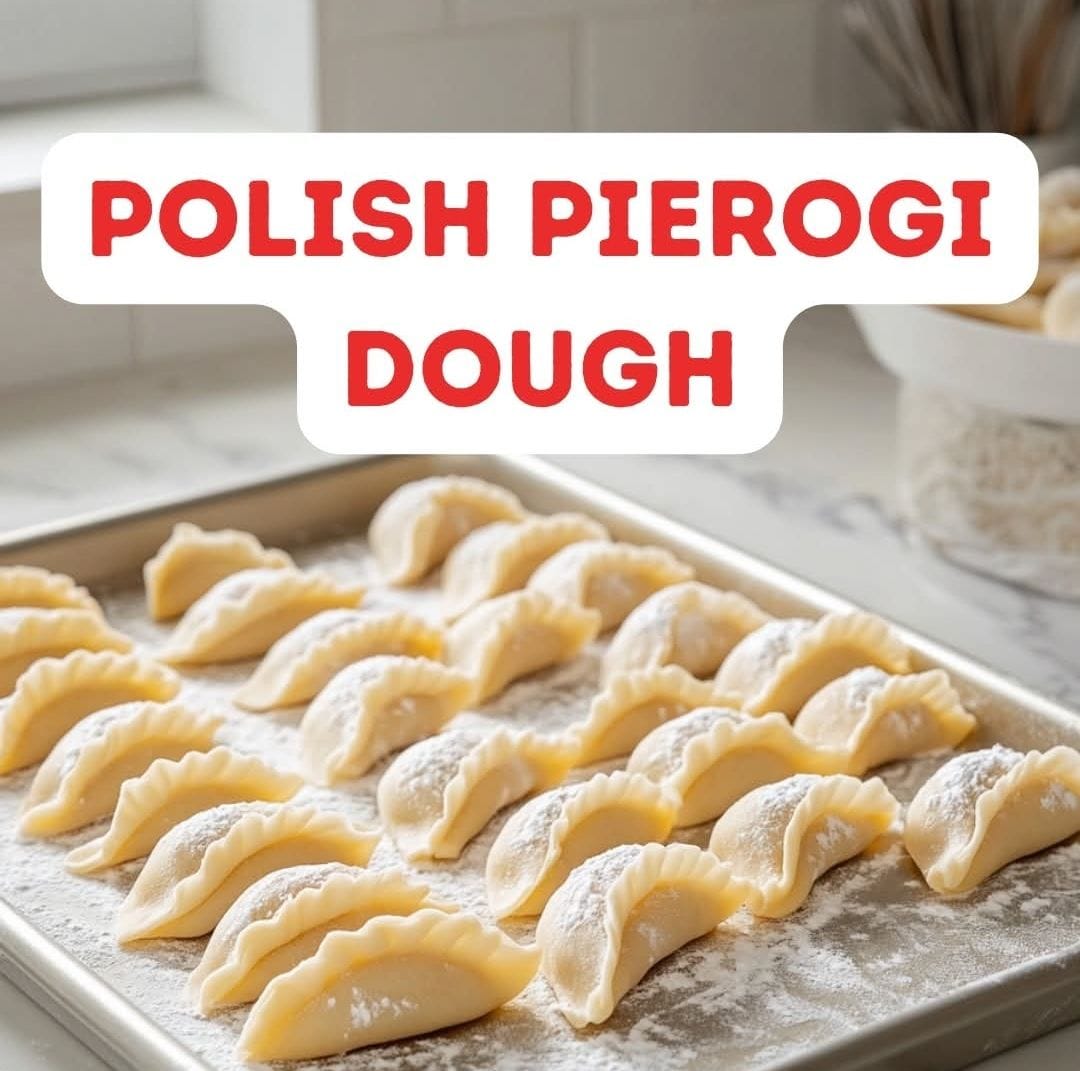
Simply place your filled, raw pierogi on a parchment-lined baking sheet in a single layer (making sure they don’t touch, or they will stick together) and freeze for two hours. Once they are rock hard, transfer them to a freezer bag. When you’re ready to eat, drop them straight from the freezer into boiling water—no thawing required!
Ready to master the dough that makes everything possible?
The complete ingredient ratios, step-by-step kneading guide, and foolproof rolling techniques are waiting for you in the comments below! Let’s get rolling.