How Owners Accidentally Train Dogs to Misbehave
You love your dog. You’d never intentionally teach them to jump on guests, pull on the leash, or bark incessantly. Yet many well-meaning pet parents unknowingly reinforce the exact behaviors they’re trying to stop.

If your dog’s bad habits seem impossible to break, the problem might not be your dog—it might be the mixed signals you’re accidentally sending.
The Hidden Way We Reward Bad Behavior
Dogs are brilliant at making connections between their actions and outcomes. When a behavior gets them something they want, they’ll repeat it. The challenge? We often reward bad behavior without realizing it.
Here’s what this looks like in real life: Your dog jumps on you when you get home. You push them down while saying “no,” but you’re also making eye contact, touching them, and giving them your full attention. To your dog, mission accomplished. They wanted your attention, and jumping got it for them. You think you’re correcting the behavior, but you’re actually reinforcing it.
Common Ways Owners Accidentally Reinforce Misbehavior
Giving attention to stop barking. Your dog barks at the window. You walk over and tell them to be quiet, maybe even pick them up or give them a treat to distract them. You’ve just taught them that barking gets your attention and possibly a reward.
Letting your dog out when they whine. Your dog whines at the door. You let them out to stop the noise. Next time they need to go out, guess what they’ll do? Whine louder and longer, because it works.
Picking up a nervous dog. Your dog acts fearful around other dogs, so you scoop them up to comfort them. While your intentions are protective, you’ve just confirmed to your dog that other dogs are indeed something to fear, and that acting scared gets them rescued.
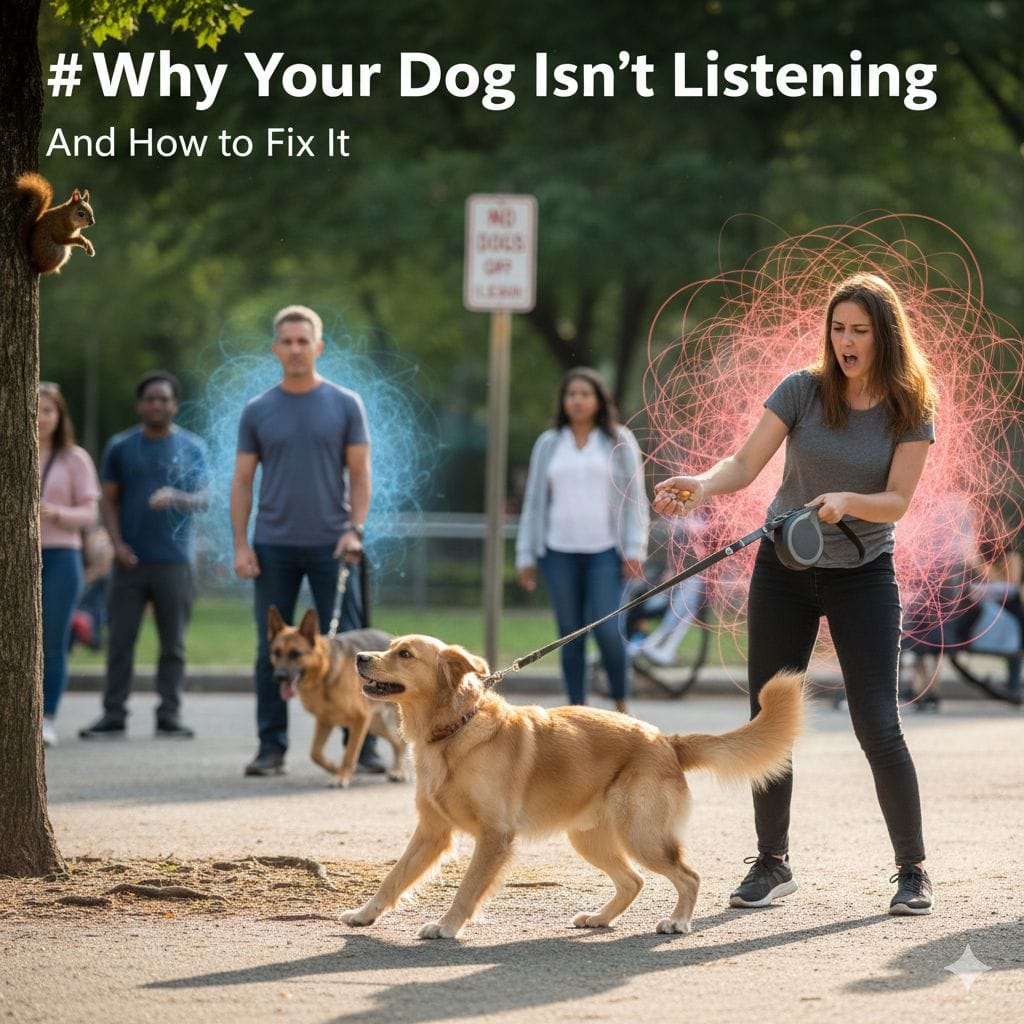
Feeding into leash pulling. Your dog pulls toward something interesting on a walk. Eventually you follow their lead and let them reach it. You’ve just taught them that pulling gets them where they want to go.
Inconsistent rules. Sometimes you let your dog on the couch, sometimes you don’t. Sometimes begging at the table gets them a scrap, sometimes it doesn’t. This inconsistency doesn’t teach your dog to stop—it teaches them to try harder and more persistently because it works often enough.
Why This Happens to Good Owners
You’re not a bad dog owner because you’ve done these things. You’re human, and these responses are natural. We want to soothe, comfort, and sometimes just stop an annoying behavior as quickly as possible.
The disconnect happens because we think in terms of punishment and correction, while dogs think in terms of cause and effect. Any reaction from you—even a negative one—can be reinforcing if your dog wanted your attention in the first place.
How to Stop Accidentally Training Bad Behavior
Ignore attention-seeking behaviors. This is harder than it sounds, but it’s powerful. When your dog jumps, turn away and cross your arms. No eye contact, no touch, no talk. Only give attention when all four paws are on the floor.
Reward what you want to see more of. Catch your dog being good and reinforce it immediately. Lying quietly? Give them attention. Sitting calmly when guests arrive? That’s treat-worthy.
Be consistent with your rules. Decide what behaviors are acceptable and stick to those boundaries every single time. If your dog isn’t allowed on the furniture, they’re never allowed on the furniture, not even when you’re feeling cuddly.
Remove rewards for unwanted behaviors. If your dog barks for attention, leave the room. If they pull on the leash, stop walking until the leash is slack. Make it clear that the behavior they’re offering doesn’t get them what they want.
Replace bad behaviors with good ones. Instead of just stopping a behavior, teach your dog what to do instead. Teach “sit” as an alternative to jumping. Teach “watch me” as an alternative to lunging at other dogs.
The Bottom Line
Your dog isn’t being stubborn or spiteful. They’re doing what works. If a behavior keeps happening, something in their environment is reinforcing it, and often that something is us.
The good news? Once you become aware of how you might be accidentally rewarding bad behavior, you can start making changes. It takes consistency, patience, and sometimes biting your tongue when you want to react, but the results are worth it.
Pay attention to what happens immediately after your dog misbehaves. Are you giving them attention, even negative attention? Are you eventually giving in to what they want? These moments are where training really happens, whether you intended it or not.
The most powerful thing you can do as a dog owner is become more aware of what you’re actually teaching your dog in those everyday interactions. Because every moment with your dog is a training opportunity—you’re either reinforcing the behaviors you want or the behaviors you don’t.