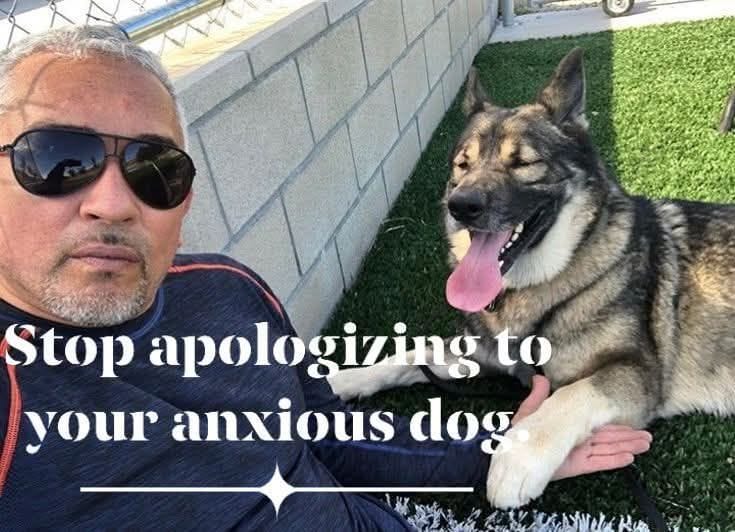

7 Secrets from Cesar Millan to Make Your Dog Obey Instantly (Without Yelling)
Cesar teaches that your body language carries far more weight than the words you say. A confident stance, a calm redirect, or a simple shift in posture often does what ten repetitions of “sit!” cannot.
Getting your dog to obey doesn’t require volume — it requires clarity, consistency, and calm. Cesar Millan’s most enduring lesson is simple: become the leader your dog is already looking for.
Practical body language tips:
- Stand straight and face your dog when giving a command. Hunching or turning away signals submission.
- Move into your dog’s space to correct unwanted behavior — don’t chase them or back away.
- Use eye contact deliberately — brief, confident eye contact establishes authority. Avoiding it signals uncertainty.
- Point, block with your body, and use gestures consistently alongside verbal cues.
Over time, many dogs will respond to a hand signal alone — no verbal command needed. That’s a sign your body language communication is working.
Secret #5: Correct the Behavior, Not the Dog
There’s a crucial distinction Cesar makes that most dog owners miss: you’re correcting the behavior, not punishing the dog.
Punishment — especially delayed punishment — creates confusion and fear. If your dog chewed your shoes while you were out and you scold them an hour later, they have no idea why you’re upset. All they learn is that you’re unpredictable.
Effective correction is:
- Immediate — within seconds of the unwanted behavior
- Calm — no screaming, no dramatics
- Brief — a short sound (like a firm “tss”), a touch, or a leash correction, then move on
- Followed by redirection — show the dog what you want them to do instead
Cesar often uses a short, sharp sound — a “tss” or similar — paired with a light touch to interrupt a dog mid-behavior. This mimics how dogs correct each other and is far more effective than repeated verbal commands.
After correction, return to neutral. Don’t linger in frustration. Dogs live in the present moment — so should you.
Secret #6: Be Consistent — Every Single Time
If there’s one thing that undermines dog training faster than anything else, it’s inconsistency.
Dogs thrive on clear, predictable rules. When the rules shift — no dogs on the couch on weekdays, but allowed on weekends; no begging at the table unless guests are over — dogs don’t understand the nuances. They just experience chaos, and chaotic environments produce anxious, disobedient dogs.
Cesar’s consistency principles:
- Every member of the household must enforce the same rules. A dog that can beg successfully from one person will always try it with everyone.
- Commands should always mean the same thing. “Down” means lie down — every time, with every person.
- Don’t give affection when a dog is in an anxious or aggressive state. You’re reinforcing whatever emotional state they’re in.
Consistency isn’t just about commands — it’s about energy, rules, and routine. The more predictable your behavior, the more your dog learns to trust and follow your lead.
Secret #7: Fulfill the Dog’s Natural Needs — Not Just Your Emotional Ones
This is perhaps Cesar’s most philosophically important teaching, and the one that challenges many well-meaning dog owners the most.