
7 Secrets from Cesar Millan to Make Your Dog Obey Instantly (Without Yelling)
Dogs are extraordinarily sensitive to human emotional states. When you’re anxious or angry, your dog senses it immediately through your body language, tone, and even your breathing. That energy signals instability, and an unstable leader is one a dog won’t follow.
How to practice it:
- Before any interaction with your dog, take a breath. Ground yourself.
- Stand tall, keep your shoulders relaxed, and move with intention.
- Speak slowly and with confidence — not meekly or aggressively.
When you show up calm and assertive, your dog naturally relaxes and looks to you for direction. This alone resolves a huge percentage of behavioral problems.
Pro tip: Practice this energy before you open the door to greet your dog. If you come home frantic and excited, you’re setting a chaotic tone for the entire interaction.
Secret #2: Exercise First — Always
One of Cesar’s most repeated mantras is: “Exercise, discipline, then affection.” The order matters enormously.
A dog with pent-up energy is a dog that cannot focus. Expecting a high-energy dog to calmly obey commands without adequate exercise is like expecting a hyper five-year-old to sit still during a three-hour lecture. It’s not going to happen.
What this looks like in practice:
- Walk your dog before training sessions, not after.
- For high-energy breeds (huskies, border collies, labs), aim for at least 45–60 minutes of vigorous exercise daily.
- A structured leash walk — where the dog walks beside or behind you, not pulling ahead — counts as mental AND physical exercise.
When your dog is physically satisfied, their mind is calm and receptive. Training a tired dog is dramatically easier than training an overstimulated one.
Secret #3: Master the Walk — It’s the Foundation of Leadership
Cesar Millan places enormous emphasis on the daily walk, and not just for exercise. The walk is the primary way dogs establish social hierarchy in the wild, and it translates directly into your home relationship.
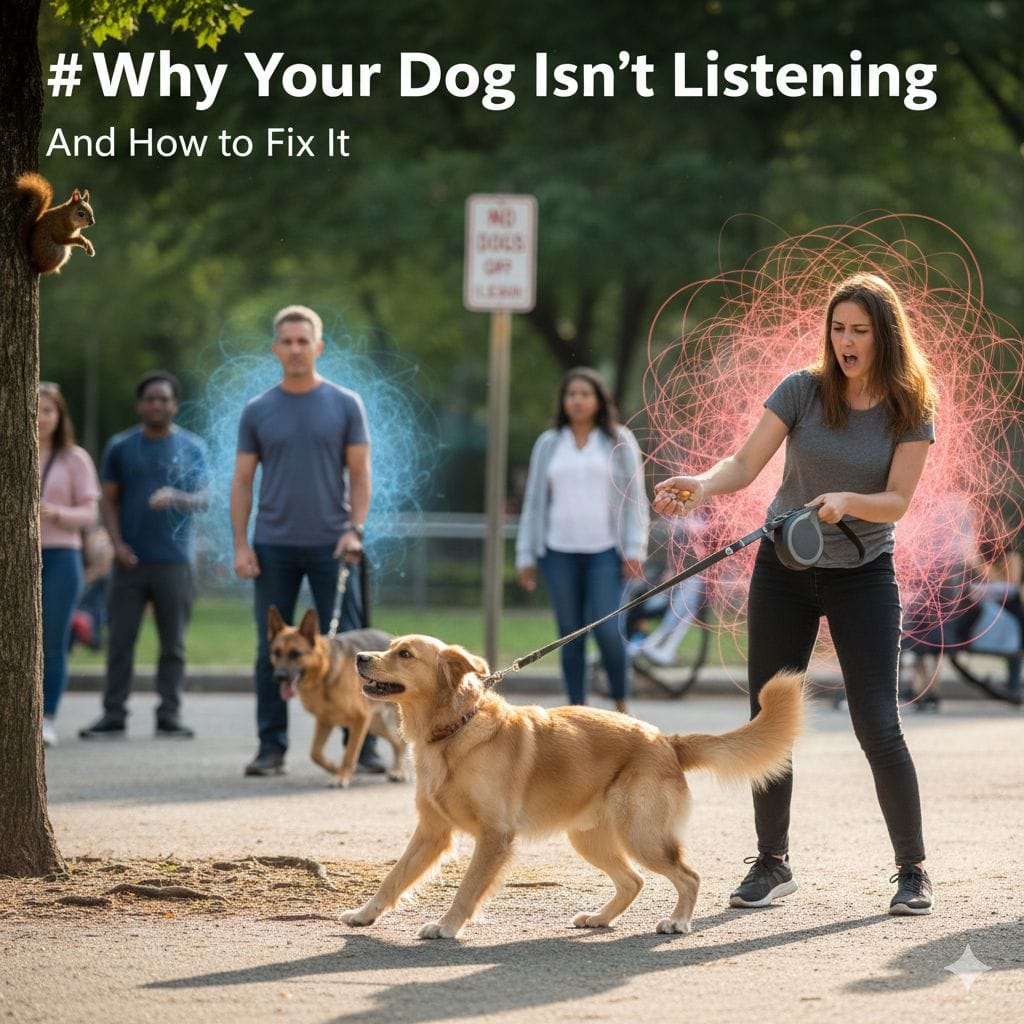
If your dog is pulling you down the street, zigzagging, stopping to sniff every three feet, or lunging at other dogs — they are leading you. And a dog that leads on the walk will feel entitled to lead in every other area of life too.
Cesar’s walking rules:
- Your dog should walk beside you or slightly behind — never in front.
- Use a short leash held close to your body, not a retractable lead.
- Correct a pull the moment it starts — a gentle sideways tug, not a yank backward.
- Stay calm and consistent. Don’t allow pulling one day and correct it the next.
Once your dog understands that you lead the walk, their overall responsiveness to your commands improves dramatically across the board.
Secret #4: Use Body Language More Than Words
Dogs don’t communicate primarily through verbal language — they communicate through body posture, movement, and energy. Yet most dog owners rely almost entirely on verbal commands, often repeating them louder and louder when ignored.