7 Essential Dog Commands Every Pet Parent Should Teach
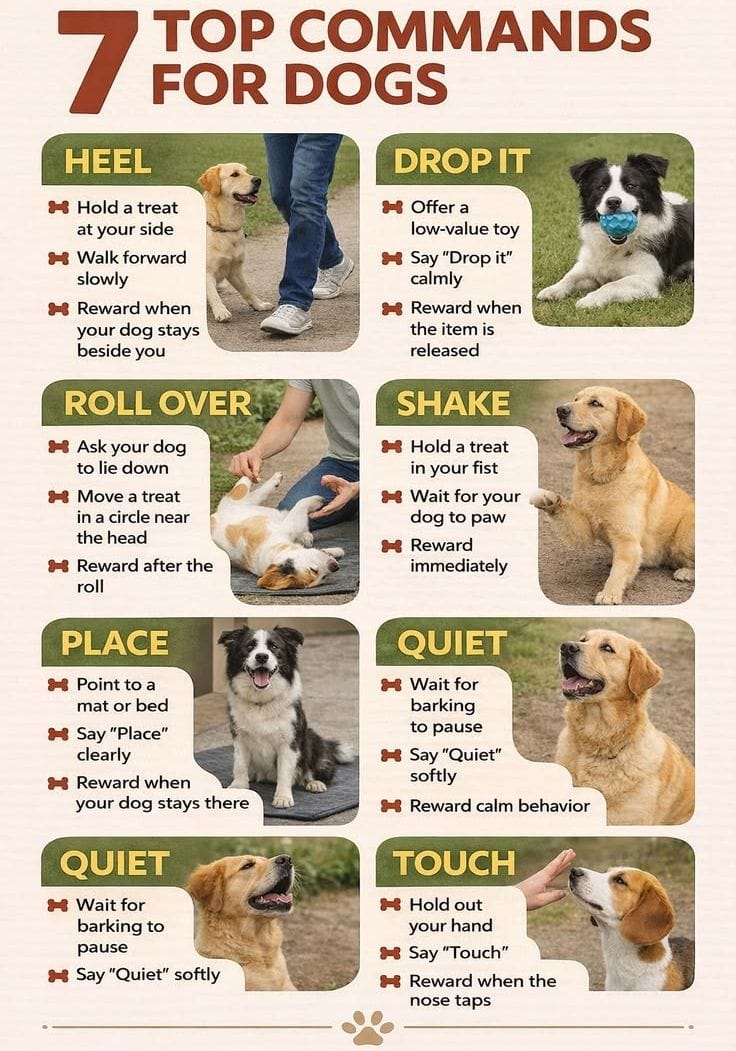
Excessive barking can be frustrating for both you and your neighbors. Teaching “Quiet” helps you acknowledge your dog’s alert while signaling to them that the situation is under control and barking is no longer necessary.
How to Train It:
- Step 1: When your dog starts barking (e.g., at a passerby), wait patiently for a brief pause or break in the barking.
- Step 2: The moment they stop to take a breath, say “Quiet” softly and calmly.
- Step 3: Immediately reward that calm, silent behavior with a treat. Note: Avoid yelling “Quiet!”, as your dog may think you are simply barking along with them.
7. Touch
“Touch” (also known as hand targeting) teaches your dog to actively bump their nose against your palm. It is a highly versatile command used to redirect a distracted dog, guide them into specific positions, or recall them away from distractions.
How to Train It:
- Step 1: Hold out your open hand, palm facing forward, a few inches away from your dog’s nose.
- Step 2: Say “Touch” in an encouraging tone. Naturally, your dog will lean forward to sniff your hand.
- Step 3: The very instant their nose taps your skin, reward them with a treat from your other hand.
Quick Reference Summary
Command Primary Benefit Key Action Heel Eliminates leash pulling Treat at hip, reward walking beside you Drop It Safety / Resource management Trade a low-value object for a high-value treat Roll Over Agility and mental stimulation Guide the nose in a circle near the head Shake Grooming prep and socialization Wait for the paw to touch your closed fist Place Boundary control and calmness Point to a mat and reward for staying there Quiet Controls excessive barking Catch a pause in barking and reward the silence Touch Redirection and focus Reward when the dog’s nose taps your open palm
Pro-Tips for Training Success:
- Keep Sessions Short: Dogs learn best in 5- to 10-minute bursts. Keep it fun and stop before they get frustrated.
- Consistency is Key: Use the exact same verbal cues and hand signals every time. Ensure everyone in the household uses the same terminology.
- End on a High Note: Always finish a training session with a command your dog knows perfectly, followed by plenty of praise. You want them looking forward to the next session!